
e-POD vs Paper POD: Why Digital Proof of Delivery Is Now a Business Necessity
Key Highlights:
- Paper POD creates invoicing delays and reduces real-time delivery visibility.
- e-POD captures signatures, photos, and timestamps digitally in real time.
- Switching to e-POD accelerates billing cycles and reduces payment disputes.
- RoaDo’s e-POD module helps manage multi-tier distribution networks efficiently.
What Is the Real Cost of Paper POD That Most Businesses Are Ignoring?
e-POD vs Paper POD is becoming a critical debate in logistics as businesses realize that traditional paper proof of delivery documents are a hidden drain on efficiency and profitability. In logistics, paper proof of delivery documents have been around for as long as trucks have been making deliveries. The process is familiar: a driver arrives at the delivery point, the consignee signs a paper document, the driver takes a copy back, and at some point that document makes its way back to the dispatcher or finance team to confirm the delivery and trigger invoicing.It sounds simple. In practice, it is one of the most inefficient processes in the entire supply chain.
Paper PODs get lost in transit. They arrive at the office days after the delivery happened. Signatures are illegible. Documents are damaged or incomplete. When a customer disputes a delivery, nobody can find the original paperwork quickly. Invoicing is delayed because the finance team cannot bill until they have confirmation that delivery occurred. And if a POD never makes it back to the office at all, the process breaks down entirely.
For a business managing tens or hundreds of deliveries a day across multiple locations, these are not occasional inconveniences. They are systematic inefficiencies with a real financial cost attached to them.
What Digital Proof of Delivery Actually Is
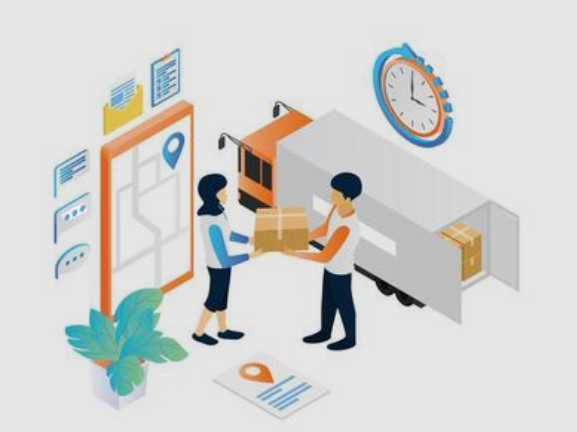
Digital proof of delivery, commonly referred to as e-POD, is the electronic capture and storage of delivery confirmation at the point of delivery. Instead of a driver carrying paper documents and returning them to the office, the delivery confirmation is captured on a mobile device in real time.
This typically includes a digital signature from the consignee, photographs of the delivered goods, GPS location and timestamp of the delivery, condition notes for any damages or shortages, and the consignee's name and contact details.
All of this information is captured through a mobile app used by the driver, uploaded instantly to the logistics platform, and linked directly to the corresponding shipment record. The moment delivery is confirmed, the information is available to everyone who needs it: the dispatcher, the finance team, the customer service team, and the shipper.
Paper POD vs e-POD: A Direct Comparison
Understanding why digital proof of delivery has become a business necessity is clearest when you compare the two approaches across the dimensions that matter most.
Speed of confirmation: With paper POD, delivery confirmation reaches the back office only when the driver returns and submits the document, which could be hours or days after the actual delivery. With e-POD, confirmation is available the moment the driver completes the delivery, in real time regardless of where the delivery took place.
Invoicing speed: Paper POD creates a gap between delivery and invoicing because the finance team cannot raise an invoice without confirmed delivery documentation. This gap is typically several days in most operations, and longer when deliveries happen in remote locations. e-POD closes this gap entirely by triggering the invoicing workflow automatically upon delivery confirmation.
Dispute resolution: When a customer disputes a delivery under a paper POD system, finding the original document, verifying the signature, and reconstructing what happened can take days. With e-POD, the complete delivery record including photos, GPS coordinates, timestamp, and signature is immediately accessible and irrefutable.
Document storage and retrieval: Paper PODs need to be physically stored, organized, and retrieved when needed. This creates a filing overhead that grows with every delivery. Digital delivery records are stored automatically, searchable by shipment number, date, customer, or driver, and retrievable instantly.
Damage and shortage documentation: Paper POD rarely captures evidence of damaged or short deliveries in a useful way. A handwritten note on a form is easy to dispute and hard to act on. e-POD allows drivers to photograph damaged goods at the point of delivery, creating undeniable visual evidence that is immediately available to all parties.
The Financial Impact of Switching to e-POD
The business case for digital proof of delivery is most clearly expressed in financial terms, and the numbers are compelling across several areas. Platforms like RoaDo show measurable impact, with documented results including a 65% faster billing cycle and a 7–10 day reduction in DSO, significantly improving working capital flow across logistics operations.
Faster billing cycles: Every day between delivery and invoicing is a day that cash is not flowing. In operations where invoicing is delayed by three to five days because of paper POD collection, switching to e-POD can meaningfully reduce debtor days and improve working capital.
Reduced invoice disputes: A significant proportion of invoice disputes in logistics originate from delivery confirmation disagreements. When the customer says delivery did not happen or was incomplete, and the shipper has only a paper POD to rely on, disputes can drag on for weeks. e-POD provides timestamped, geotagged, photographic evidence that resolves most disputes quickly and in the shipper's favor.
Lower administrative costs: The cost of managing paper POD processes, collecting documents from drivers, filing them, retrieving them for disputes, and chasing missing ones, is rarely calculated explicitly but adds up significantly over time. Eliminating this overhead frees up staff time for higher-value work.
Fewer lost deliveries: When a paper POD goes missing, it creates a situation where a delivery that happened cannot be proven. This either delays payment indefinitely or results in a credit being issued to the customer for a delivery that was completed. e-POD eliminates this category of loss entirely.
Why Does e-POD Matter Specifically for Indian Distribution Networks?
India's distribution landscape presents specific challenges that make digital proof of delivery particularly valuable.
Geographic spread: Manufacturers distributing goods across multiple states face the challenge of collecting paper PODs from deliveries happening hundreds or thousands of kilometers away. Getting those documents back to head office quickly enough to support timely invoicing is a genuine operational challenge. e-POD makes geography irrelevant to the confirmation process.
Multi-tier distribution: Many Indian manufacturers operate across primary, secondary, and tertiary distribution networks, moving goods from factories to regional depots, then to distributors, and then to retailers. Each leg of this chain generates its own delivery confirmation requirement. Managing paper PODs across all three tiers simultaneously is extremely difficult. e-POD handles all tiers within a single system.
Fragmented transporter base: India's logistics market includes a large number of small fleet operators and individual truck owners. These transporters often lack the administrative infrastructure to manage paper POD collection and return reliably. A simple mobile app for e-POD capture is easier for them to adopt than a structured paper process, and it gives the shipper better documentation than they typically get from paper-based systems.
GST and compliance requirements: Delivery confirmation is increasingly linked to compliance workflows in Indian logistics. e-POD that integrates with invoicing and GST reconciliation processes reduces the manual effort required to connect delivery records to financial and compliance documentation.
What to Look for in an e-POD Solution
Not all digital proof of delivery implementations deliver equal value. When evaluating an e-POD solution, these are the capabilities that matter most.
The system should work on basic smartphones without requiring expensive hardware. It should function in areas with poor or no connectivity, syncing data when a connection is restored. It should capture signatures, photos, timestamps, and GPS coordinates as standard. It should integrate directly with your shipment management and invoicing systems so that delivery confirmation automatically triggers downstream workflows. And it should provide instant visibility to all relevant stakeholders without requiring manual sharing or reporting.
Conclusion
Paper proof of delivery had its time. But in a logistics environment where speed, accuracy, and visibility are competitive requirements rather than nice-to-haves, it simply cannot keep up.
Digital proof of delivery solves real problems: delayed invoicing, disputed deliveries, lost documents, and the administrative burden of managing paper across distributed operations. The switch from paper to e-POD is one of the most straightforward improvements a logistics operation can make, with benefits that show up quickly and compound over time.
RoaDo’s Freight Operating System (FOS) integrates e-POD directly into the freight management workflow, connecting delivery confirmation to invoicing, compliance, and supply chain visibility in a single system so that every delivery becomes an instant, accurate, and actionable data point.
Frequently Asked Questions
1. What is e-POD in logistics?
e-POD is electronic proof of delivery that captures signatures, photos, timestamps, and delivery confirmation digitally in real time.
2. Why are paper POD processes inefficient?
Paper PODs are slow to retrieve, easy to lose, difficult to verify, and delay invoicing and dispute resolution.
3. How does e-POD improve invoicing speed?
Digital delivery confirmation instantly triggers invoicing workflows without waiting for physical documents to return to the office.
4. Can e-POD reduce delivery disputes?
Yes, e-POD provides timestamped signatures, GPS locations, and delivery photos that help resolve disputes quickly and accurately.
5. Does e-POD work in low-connectivity areas?
Most modern e-POD systems support offline data capture and sync automatically once internet connectivity is restored.
6. Why is e-POD important for Indian distribution networks?
It simplifies document management across multi-state deliveries, fragmented transporter networks, and large distribution operations.
7. What information does an e-POD system capture?
It typically captures signatures, delivery photos, GPS coordinates, timestamps, consignee details, and delivery condition notes.
8. How does e-POD improve logistics visibility?
Delivery confirmation becomes instantly accessible to logistics, finance, and customer service teams within a centralized system.
Replace paper delivery processes with the RoaDo e-POD solution that accelerates invoicing, improves shipment visibility, reduces disputes, and simplifies delivery confirmation management.