
How Real-Time Delivery Tracking Fixes the Multi-Stop Problem in FMCG Distribution
Key Highlights
- Mid-mile deliveries account for up to 40% of total logistics costs in India (Source: Invest India / National Logistics Policy)
- India's mid-mile deliveries market was valued at $6.5 billion in 2024 and is projected to reach $24 billion by 2033 (Source: IMARC Group, via ITLN)
- Multi-stop route planners reduce failed deliveries, cut fuel costs, and improve SLA compliance without adding vehicles
- Freight Operating Systems like RoaDo enable real-time delivery tracking across B2B fleets without GPS hardware or app installation
Why Does FMCG Distribution Break Down at Scale?
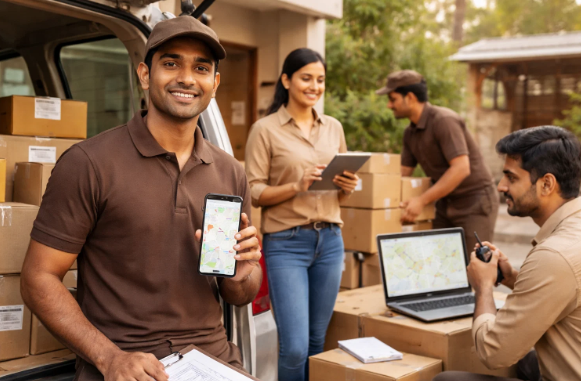
The core problem isn't the number of stops; it's the absence of real-time delivery tracking across those stops. When a single vehicle services eight to fifteen distributor or retailer drops in a day, every delayed stop cascades into the next. A consignment that runs two hours late at stop four can trigger missed delivery windows at stops five through eight, overtime for drivers, and empty shelves at retail points that had planned their replenishment around that vehicle's arrival.
Nearly 90% of India's retail sector is unorganized, which forces FMCG companies to work through fragmented distribution channels. This means most delivery fleets are not owned assets; they're contracted vehicles from small transporters who may have no digital infrastructure at all. When the dispatcher has no visibility into where these vehicles are, the only available tool is a phone call. At scale, fifty vehicles, three hundred stops, six cities, that phone-call coordination model collapses.
The main challenges in FMCG distribution include high logistics costs, credit dependency, poor infrastructure, and lack of real-time data. The data gap is often the most damaging because it compounds every other problem: without live location and status data, logistics managers cannot intervene early, cannot give accurate ETAs to downstream teams, and cannot build a reliable record for billing reconciliation.
The Real Cost of a Missed or Late Delivery Stop
A missed stop is rarely just a missed stop. Mid-mile deliveries, the final stage through which goods reach the end consumer, cost around 40% of the overall logistics cost in India. That is a disproportionate share of total transport spend to leave unmanaged.
India's logistics costs constitute 13 to 14% of GDP, compared to 8 to 11% in most major economies, with nearly one-third of that cost resulting from inefficiencies in infrastructure. The National Logistics Policy, launched in September 2022, targets reducing this to 8% of GDP by 2030. Closing that gap requires efficiency gains at every tier, and multi-stop secondary distribution is one of the highest-friction tiers.
The direct costs of a failed or late delivery are visible: return freight, restocking, and rescheduling. The indirect costs are less visible but often larger, such as out-of-stocks at retail that erode distributor confidence, penalty clauses in service agreements, and disputed invoices that slow collections. India's mid-mile deliveries market reached $6.5 billion in 2024 and is expected to grow to $24 billion by 2033, registering a CAGR of 13.7% during 2025–2033. Companies operating in this market without structured visibility tooling will find their cost base growing faster than the market itself.
When Route Planning Is Done Manually
Manual route planning for multi-stop FMCG deliveries typically relies on dispatcher judgment, basic maps, and WhatsApp coordination with drivers. The sequencing of stops is usually habitual; drivers repeat routes they have always taken, regardless of whether traffic patterns, load mix, or delivery priorities have shifted.
When dispatchers rely on manual routing or basic heuristics rather than algorithm-driven systems, the gaps are measurable: higher late-delivery rates, more failed or missed stops requiring rework, and reduced vehicle utilization with more stops unserved per route. For an FMCG operation running twenty or more vehicles daily, this inefficiency compounds quickly into high operational costs.
What Does Route Optimization Software Actually Do for FMCG Fleets?
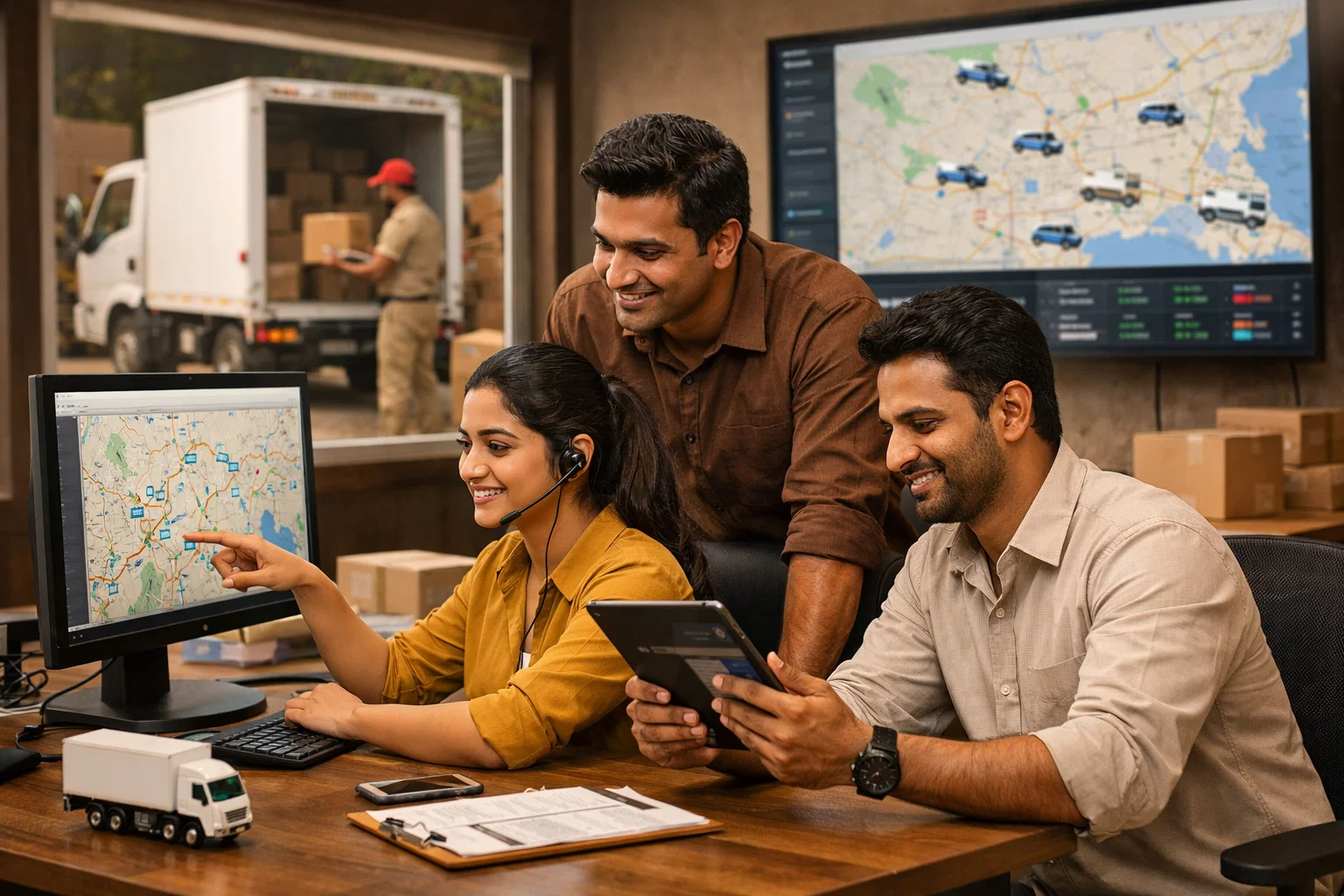
Route optimization software does more than find the shortest path between two points. A multi-stop route planning engine considers essential factors such as delivery time windows, order priority, and traffic data, not just distance. The practical output is a sequenced route that maximizes the probability of completing every stop within its required window, given the vehicle's load capacity and the day's traffic conditions.
Route optimization software helps plan efficient delivery paths, reducing fuel consumption and transit times, a key lever for FMCG companies managing fragmented networks and long routes. When integrated with order management systems, the same platform can auto-assign vehicles based on load type and capacity, flag conflicts between overlapping deliveries, and dynamically reroute when a stop is canceled or a new urgent order is added mid-day.
The table below illustrates how technology-enabled operations compare with the manual status quo across key distribution functions.
Real-Time Delivery Tracking: What Logistics Managers Can Actually See
Live visibility is the operational core that makes everything else possible. With real-time delivery tracking in place, logistics managers can see the current vehicle location, actual versus planned arrival times, which stops have been completed, and which are at risk, all from a single dashboard accessible to anyone in the operation who needs it.
This matters most in exceptions. A vehicle stuck in unexpected traffic on a route with three pending stops needs a dispatcher decision within minutes, not hours. Without live data, the decision arrives too late. With it, the dispatcher can call ahead to the next stop's receiving team, adjust expectations, or reroute the vehicle if an alternate path is faster.
RoaDo's Freight Operating System addresses this challenge without requiring GPS hardware installation or driver smartphones. Using SIM-based tracking and integration with India's Digital Public Infrastructure, including GSTN and VAHAN, the platform provides real-time visibility and automated compliance monitoring across contracted fleets. Its AI-powered exception management has helped users avoid over one lakh delays, and the system monitors e-way bill validity during transit, alerting logistics managers before expiration rather than after a penalty has been triggered
Real-time tracking and predictable delivery windows are no longer perks; they are prerequisites for winning customer loyalty in India's FMCG and grocery market. For B2B distribution specifically, that loyalty is built with distributors and large retailers who have their own downstream commitments to meet.
Building a Scalable Distribution Operation: What FMCG Logistics Teams Need
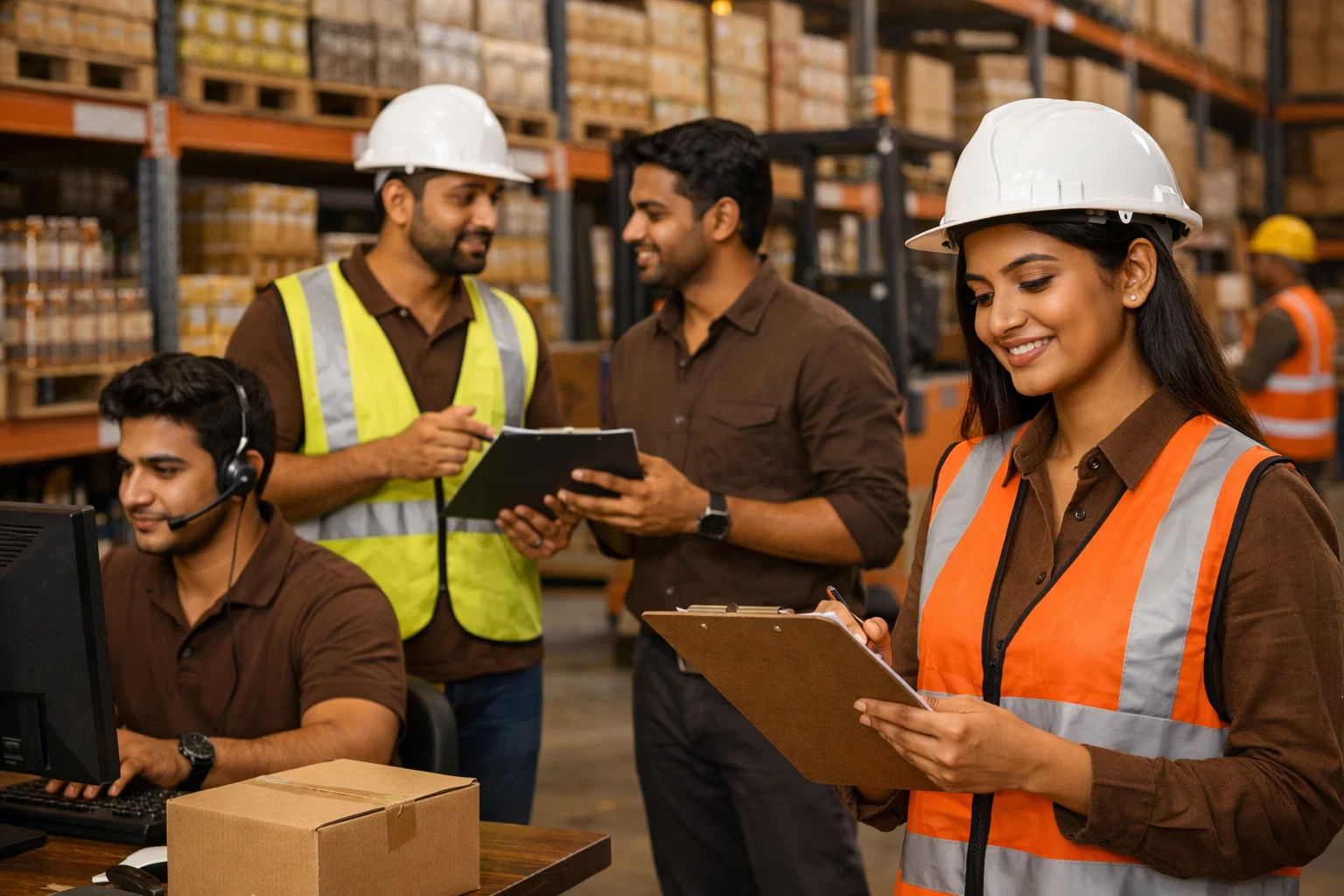
Scaling multi-stop FMCG distribution is not simply a matter of adding more vehicles. The incomplete transportation system in India leads to delayed deliveries along with elevated logistics expenses, with the absence of modern warehousing space in rural locations forcing companies to maintain urban storage facilities, prolonging delivery times, and increasing distribution expenses. Technology does not fix infrastructure gaps, but it can reduce the friction created by those gaps by ensuring every available vehicle is used as efficiently as possible.
When evaluating route optimization and tracking solutions for the FMCG scale, consider five things. First, does the system handle multi-stop sequencing with time window constraints, not just point-to-point routing? Second, does it provide live visibility without requiring hardware installation on third-party vehicles, a critical factor when your fleet is largely contracted? Third, does it integrate with your existing compliance obligations: e-way bill generation, VAHAN vehicle verification, and GSTN reconciliation? Fourth, does it generate ePOD at the point of delivery, feeding directly into invoice generation? And fifth, does the analytics layer allow you to track performance by route, by vehicle, and by transporter over time, so you can make data-backed decisions about your transporter base?
Platforms built for this specific complexity, like RoaDo, which was designed for B2B manufacturing and distribution operations in India, address these requirements as a connected system rather than requiring separate tools for each function. The ability to deploy without capital expenditure and get operational visibility within a short setup window makes the entry barrier low enough to pilot before committing at scale.
Less mileage, less idling, and fewer failed delivery attempts mean lower fuel costs, less overtime, and better resource allocation, the compounding benefits of systematic route optimization at scale.
Conclusion
Scaling multi-stop FMCG distribution is achievable by linking visibility, sequencing, and compliance into a single operational loop. Audit processes, pinpoint tracking gaps, optimize routes, and ensure data flows to all teams for coordinated action. Pilot improvements with clear KPIs before scaling. With modern, hardware-free platforms like RoaDo, technology and process gaps are no longer barriers; they’re solvable.
Frequently Asked Questions (FAQs)
- What is real-time delivery tracking, and how does it work for FMCG distribution?
Real-time delivery tracking shows live vehicle locations and stop statuses using modern methods like SIM-based or browser-based tracking, which do not require dedicated GPS hardware or driver apps. - How does route optimization software help manage multi-stop FMCG deliveries?
Route optimization software sequences multiple stops efficiently, considering traffic, load, and delivery priorities, reducing missed deliveries and fuel costs. - What is the cost of mid-mile deliveries as a percentage of total logistics costs in India?
Mid-mile deliveries represent roughly 40% of total logistics costs in India, making it the highest-cost segment with the most efficiency gains potential. - What is a multi-stop route planner and why do FMCG companies need one?
A multi-stop route planner automatically optimizes delivery sequences for vehicles serving multiple distributors or retailers, ensuring timely and cost-effective FMCG distribution. - How do FMCG logistics managers handle delivery exceptions and delays in transit?
AI-enabled visibility flags delays or route deviations proactively, allowing managers to intervene before issues impact subsequent stops. - Can small transporters or 3PLs use route optimization software without heavy investment?
Yes, SaaS platforms like RoaDo offer a zero-CAPEX model and can onboard transporters in under 5 minutes, allowing them to benefit from route optimization and real-time tracking without any hardware investment. - What is ePOD (electronic proof of delivery) and why does it matter in FMCG supply chains?
ePOD digitally confirms delivery at each stop, speeding invoicing, reducing disputes, and improving FMCG collections cycles. - How does real-time visibility help with e-way bill compliance during multi-stop deliveries?
Integrated tracking alerts managers when e-way bills approach expiration, enabling timely extensions and avoiding GST penalties during multi-stop FMCG trips.