What Is a Logistics Operating System? And Why TMS Alone Isn't Enough
Key Highlights:
- A logistics operating system unifies planning, compliance, finance, and visibility into one connected platform.
- Unlike a traditional TMS, a logistics OS closes gaps in freight finance and regulatory compliance.
- Indian manufacturers need deeper integration with GST, VAHAN, and fragmented carrier networks.
- Moving from a TMS to a logistics OS transforms supply chains from reactive silos into connected operations.
The Problem With How Most Businesses Think About Logistics Technology
When most manufacturers or logistics managers decide they need technology to improve their supply chain, the first thing they reach for is a transportation management system. A TMS is the default answer to logistics technology questions, and for good reason. It solves real problems around shipment planning, carrier selection, and basic tracking.
But here is the issue. Most supply chain problems are not purely transportation problems. They are coordination problems. They are visibility problems. They are financial problems. They are compliance problems. And a TMS, no matter how well-built, was designed to solve the transportation piece, not all of the above.
This is why so many businesses that implement a TMS find themselves, a year or two later, still dealing with invoice disputes, compliance failures, siloed data across departments, and a finance team with no real-time view of freight costs. The TMS did what it was supposed to do. It just was not enough.
What Is a Transportation Management System?
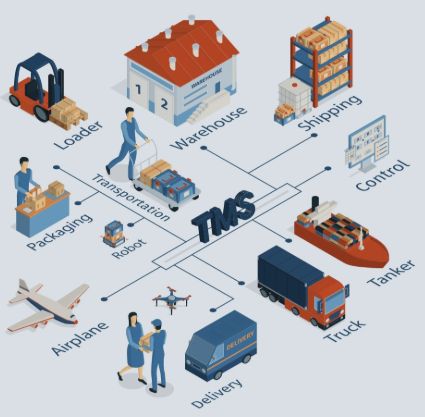
A transportation management system is a logistics software platform focused on planning and executing the physical movement of goods. Its core capabilities typically include shipment planning and load building, carrier selection and rate comparison, dispatch and route management, basic shipment tracking, and freight invoice management.
A good TMS reduces the manual effort involved in planning shipments and provides some level of visibility into where goods are in transit. For businesses with straightforward logistics operations, this is genuinely valuable.
The limitations appear when you start asking more of the system. What happens when you need compliance automation for e-way bills and GST? What happens when your finance team needs real-time freight cost accruals linked to shipment records? What happens when your sales team needs visibility into delivery timelines?
A TMS was not built to answer these questions. Plugging additional tools around it creates exactly the kind of fragmented, siloed technology environment that causes the problems businesses were trying to solve in the first place.
What Is a Logistics Operating System?
A logistics operating system, also referred to as a freight operating system (FOS), is a comprehensive platform that unifies every function across the supply chain into a single, connected system. It goes beyond moving goods from point A to point B. It connects the operational, financial, compliance, and analytical layers of logistics into one coherent environment.
Think of it this way. A TMS is like a scheduling tool. A logistics operating system is the entire back office of your supply chain, the system of record for every decision, transaction, document, and data point across your freight operations.
The key difference is integration. In a logistics operating system, shipment data, financial data, compliance data, and performance data all live in the same environment and communicate in real time. When a shipment is dispatched, the e-way bill is generated automatically. When it is delivered, the proof of delivery triggers the invoice. When the invoice is submitted, it is automatically audited against contracted rates. All of this happens within one system, without manual handoffs between disconnected tools.
This level of integration changes what is possible. Decisions that used to take days now happen in minutes. Errors that used to be discovered weeks later are caught in real time. Visibility that used to require manual reporting is available on demand across every team and stakeholder.
Where TMS Falls Short: The Gaps That Matter Most
Compliance automation: A TMS tracks shipments. It does not automatically generate e-way bills, verify vehicle compliance through VAHAN, or reconcile GST across transactions. Logistics operating systems like RoaDo automate these checks through GSTN and VAHAN integrations, helping businesses reduce compliance risks and avoid costly shipment delays. In India, where compliance failures carry direct financial penalties and can result in detained shipments, this gap is significant.
Freight finance and invoice management: Most TMS platforms offer basic freight invoice processing but fall short of automated invoice auditing, rate contract management, and vendor payment workflows. Finance teams end up working in parallel systems, reconciling manually, and discovering errors long after they occur. A logistics operating system streamlines invoice auditing and payment workflows, helping businesses accelerate billing cycles and reduce reconciliation delays.
Multi-stakeholder visibility: A TMS gives the logistics team visibility into shipments. It rarely extends that visibility to sales teams, finance teams, or senior management. A logistics operating system makes cross-functional visibility a core capability, not an add-on.
Analytics and decision intelligence: Basic TMS reporting covers shipment volumes and carrier costs. A logistics operating system delivers deeper analytics: freight cost per unit by lane, carrier performance by route and season, and exception rates by facility. This is the kind of intelligence that drives genuinely better supply chain decisions.
End-to-end order visibility: A TMS typically picks up the shipment at dispatch. A logistics operating system connects upstream to order management and downstream to financial settlement, giving a true end-to-end view of the supply chain.
Why Indian Supply Chains Need a Logistics Operating System
The case for a logistics operating system is compelling in any market. In India, it is particularly strong.
India's compliance environment is unlike almost anywhere else. E-way bill requirements, GST reconciliation, VAHAN-based vehicle verification, and state-specific regulations create a compliance overhead that no globally built TMS can adequately address. A logistics operating system designed for India bakes these requirements into the core of the platform rather than treating them as an afterthought.
India's carrier ecosystem is also highly fragmented. Most freight moves through small fleet operators, who may not have GPS devices installed and communicate primarily through phone calls. A logistics operating system like RoaDo that offers hardware-free tracking through SIM and browser-based visibility, mobile-based driver updates, and flexible carrier onboarding is far more practical than one that assumes a standardized, well-integrated carrier base.
Finally, India's manufacturing sector is scaling rapidly. Businesses need a logistics technology foundation that grows with them, handling more shipments, more carriers, and more compliance requirements without requiring a system replacement every few years. A logistics operating system is built for this kind of scale. A standalone TMS is not.
The Building Blocks of a True Logistics Operating System

A genuine logistics operating system covers several interconnected capability areas: digitized order and contract management, AI-driven dispatch and execution, integrated compliance automation for e-way bills and GST, real-time supply chain visibility without GPS hardware, digital proof of delivery linked to invoicing workflows, automated freight invoice auditing and vendor payment management, advanced analytics and reporting, and deep ERP integrations with SAP, Oracle, Tally, and other enterprise systems.
When all of these capabilities work together in a single platform, the supply chain stops being a collection of disconnected processes and becomes an integrated, intelligent operation.
Conclusion
A transportation management system is a useful tool. But useful is not the same as sufficient. As supply chains grow more complex, the gaps left by a standalone TMS become more costly and more visible.
A logistics operating system fills those gaps by connecting transportation, compliance, finance, and analytics into a single platform that gives every stakeholder a real-time view of what is happening and why. It transforms logistics from a reactive, manually managed cost center into a proactive, data-driven strategic function.
For manufacturers and logistics businesses looking to make this shift, RoaDo’s Freight Operating System (FOS) is designed specifically for India’s supply chains, bringing together every capability needed to manage freight operations with the speed, visibility, and intelligence that modern businesses require.
The question is no longer whether a logistics operating system is worth investing in. It is how much longer you can afford to operate without one.
Frequently Asked Questions
1. What is a logistics operating system?
A logistics operating system unifies transportation, compliance, finance, analytics, and visibility into one connected supply chain platform.
2. How is a logistics operating system different from a TMS?
A TMS manages transportation workflows, while a logistics operating system connects end-to-end operational and financial logistics processes.
3. Why is a standalone TMS not enough anymore?
Modern supply chains need compliance automation, finance integration, and cross-functional visibility that most TMS platforms cannot fully provide.
4. What problems does a logistics operating system solve?
It reduces siloed operations, manual reconciliation, compliance risks, delayed reporting, and fragmented shipment visibility.
5. Why do Indian businesses need a logistics operating system? Indian supply chains face GST, e-way bill, and fragmented carrier challenges that require deeper operational integration than a standard TMS.
6. Can a logistics operating system improve freight finance management?
Yes, it automates invoice auditing, vendor payments, freight accruals, and rate reconciliation within the same logistics workflow.
7. Does a logistics operating system support real-time visibility? Yes, it provides live shipment, compliance, and operational visibility across logistics, finance, and management teams simultaneously.
8. What features should a modern logistics operating system include?
It should include dispatch automation, compliance tools, freight finance, analytics, ERP integrations, and real-time shipment tracking.
Upgrade beyond traditional TMS with RoaDo logistics operating system that connects freight operations, compliance, visibility, analytics, and finance in one intelligent platform.