
Why Small Trucking Companies Are Abandoning GPS Devices
Key Highlights
- Most of India’s trucking world is made up of small players; over 75% of owners have fewer than five trucks, which makes the high price of GPS hardware really hard to justify.
- Buying a GPS unit isn't a one-time thing; between the upfront cost (₹3,000–₹8,000) and monthly fees, it’s a heavy weight on a small budget.
- Even the best tech can’t prevent a driver from unplugging a device, and in India, driver "workarounds" are among the biggest reasons tracking fails.
- Between theft and the rough state of Indian roads, GPS devices often break or disappear long before they’re supposed to.
- Hardware-free tracking (SIM-based) gives fleet owners the location and compliance data they need with zero upfront investment.
- Moving away from physical hardware isn’t about being "old school"; it’s actually a smarter, more practical way to handle how trucking works in India.
Introduction
Imagine a fleet owner with 12 trucks who decides to go "high-tech" and installs GPS units in every vehicle. Fast forward six months: three units were stolen, two were unplugged by drivers who didn't want to be watched, and another was rattled to pieces on a potholed highway. Now, the owner is paying monthly SIM fees for 12 trucks but can only actually see seven of them on his screen. The other five? Completely invisible.
This isn't a rare story. It’s what’s happening all over India, and it’s exactly why so many small trucking companies are ditching GPS hardware entirely. It’s not that they don't want to track their trucks; it’s just that physical GPS devices often don't survive the "real world" of Indian logistics. With better, hardware-free options now available, the old way of bolted-on boxes just isn't making sense anymore.
Is GPS Hardware Actually Worth the Investment for Small Fleets?
The price tag you see on a GPS brochure is rarely the full story. In India, a basic unit might cost between ₹3,000 and ₹8,000. But then you have to add in the monthly SIM and data charges, usually another ₹150 to ₹300 per truck. For a small fleet of 15 trucks, you’re suddenly looking at over ₹50,000 a year just to keep the data flowing, and that doesn't even cover repairs or replacements.
There’s also a major logistical headache: hired trucks. Most small operators in India don't just use their own vehicles; they hire extra trucks trip-by-trip. You can’t exactly go around bolting GPS units onto a truck you’ve hired for a single day and expect to get the device back easily. Since 75% of Indian truck owners own five or fewer vehicles, this "fixed cost" for a "variable business" just doesn't add up.
Why Are Drivers the Biggest GPS Compliance Problem?
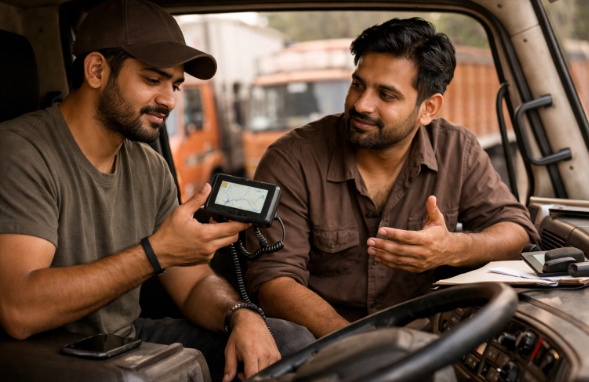
You can have the most expensive tech in the world, but it’s useless if the driver doesn't want it there. In India, driver tampering is a huge issue. Drivers often unplug the devices, claiming they drain the battery or mess with the truck's electronics. Some even swap out the SIM cards so they can't be tracked.
To many drivers, a GPS unit feels like a "spy in the cab" watching their every move, speed, and rest stop. Because they’ve worked with a lot of freedom for years, this constant monitoring creates a lot of friction. When there’s friction, drivers find ways to make the device "stop working." This is precisely where the hardware-free approach changes the game.
Unlike traditional GPS systems that require a physical 'black box' or driver apps that drain batteries and feel invasive, RoaDo’s tracking works without any driver-side software. Because there is no app to install and no hardware to unplug, it significantly reduces compliance friction. "Drivers feel less like they are being 'spied on' by a machine, and fleet owners finally get the 100% visibility they were promised, without the constant struggle for driver cooperation.
What Happens When a GPS Device Gets Stolen or Damaged?

Trucks spend a lot of time parked in places that aren't exactly secure, like roadside dhabas, border crossings, or busy loading yards. This makes GPS units an easy target for theft. Even if they aren't stolen, India’s roads are famously tough on electronics. Constant vibrations, dust, and extreme heat can kill a device much faster than the manufacturer’s warranty suggests.
When a device fails or gets swiped, that truck "goes dark." The owner is back to square one: calling the driver every hour to ask where they are. The cycle of buying, installing, losing, and rebuying units is a hidden drain on profits that many small owners didn't sign up for.
How Does Hardware-Free Tracking Actually Work?
This is where the "Hardware-Free Revolution" comes in. SIM-based tracking skips the physical device altogether. Instead, it uses the mobile network and the driver's existing phone to figure out where the truck is. There’s no installation, no maintenance, and nothing for anyone to steal.
For a small fleet owner, this is a game-changer. It doesn't matter if you own the truck or just hired it for one trip; as long as the driver has a phone, you can track the shipment. But it’s not just about location. Freight Operating Systems like RoaDo connect directly to India’s Digital Public Infrastructure (DPI), including VAHAN (to instantly verify vehicle fitness, permits, and insurance) and GSTN (to monitor e-way bills). While a GPS box on a dashboard is 'blind' to compliance, RoaDo monitors paperwork in real-time. By alerting managers before an e-way bill expires during transit, RoaDo helps save over ₹20 crore in potential penalties every single day across its network of transporters.
What Do Small Fleet Owners Actually Gain by Switching?

The difference is like night and day.
- The "Before" Way: You’re chasing drivers on WhatsApp, waiting days for paper proof of delivery (POD) to arrive in the mail, and arguing with customers over whether a shipment was actually late.
- The "After" Way: You have one dashboard showing every truck's live status. You get automatic alerts if a driver takes a weird detour or if an e-way bill is about to lapse. You get digital proof of delivery the second the goods arrive, which means you can send your invoice and get paid much faster.
Because there’s no upfront cost (zero CAPEX), a person with two trucks gets the same powerful tools as a company with fifty. Research shows that small transporters actually adopt this kind of tech much faster because it doesn't require a big, scary investment.
Is Hardware-Free Tracking the Right Choice for Every Fleet?
To be fair, it’s not a one-size-fits-all solution, but for most small Indian operators, it’s the best fit. If you need to know exactly how much fuel the engine is burning or how much air is in the tires, you might still need hardware. That’s deep "telematics." But for the questions that actually keep fleet owners up at night, "Where is my truck?" "Is the paperwork legal?" and "Did the goods get there?" Hardware-free tracking handles all of it without a headache.
Conclusion: The Shift Is Already Happening
GPS hardware was a great solution when it was the only option. But times have changed. Today’s trucking operators are looking for tools that fit the way they actually work: moving fast, using different trucks, and keeping costs low.
Platforms like RoaDo have built their whole system around this reality. By focusing on SIM-based visibility and automated compliance through VAHAN and GSTN, they’ve removed the "hardware barrier." For any small fleet owner tired of repairing broken GPS units or arguing with drivers, the real question isn't whether to switch; it's whether you can afford to stay stuck in the old way.
Frequently Asked Questions
1. Why are small trucking companies in India abandoning GPS devices?
Small trucking companies in India are moving away from traditional GPS devices due to high upfront costs, recurring SIM fees, device theft, driver tampering, and frequent hardware damage on rough roads. For fleets with fewer than five trucks, the cost and maintenance burden often outweigh the benefits, making hardware-free tracking solutions more practical.
2. How much does a GPS tracking device cost for trucks in India?
A basic GPS tracking device in India typically costs between ₹3,000 and ₹8,000 per truck. In addition, fleet owners must pay monthly SIM and data charges ranging from ₹150 to ₹300 per vehicle. Over a year, this can exceed ₹50,000 for a small fleet, excluding repair or replacement expenses.
3. What are the biggest problems with GPS tracking devices in trucks?
The most common issues include driver tampering (unplugging or disabling devices), theft when trucks are parked, hardware damage due to dust and vibrations, and recurring maintenance costs. These problems often lead to incomplete tracking visibility and unreliable fleet monitoring.
4. What is hardware-free truck tracking?
Hardware-free truck tracking is a SIM-based or mobile-network-based solution that does not require installing a physical GPS device in the vehicle. Instead, it uses mobile connectivity and digital infrastructure to provide real-time location tracking, shipment visibility, and compliance monitoring without upfront hardware costs.
5. How does SIM-based truck tracking work in India?
SIM-based truck tracking leverages mobile network data and the driver’s existing phone connectivity to determine vehicle location. Advanced Freight Operating Systems like RoaDo integrate with India’s Digital Public Infrastructure such as VAHAN and GSTN to track compliance, permits, and e-way bills in real time.
6. Is hardware-free tracking reliable compared to GPS devices?
For most small fleet owners, hardware-free tracking provides reliable real-time visibility without the risk of hardware failure or tampering. While it may not offer deep telematics data like fuel consumption or tyre pressure, it effectively answers critical operational questions such as truck location, delivery status, and compliance validity.
7. Can hired trucks be tracked without installing GPS devices?
Yes. Hardware-free tracking is especially useful for hired or trip-based trucks. Since there is no need to install a physical device, fleet owners can track shipments even when using third-party or short-term hired vehicles.
8. What are the benefits of switching to hardware-free fleet tracking for small transporters?
Small fleet owners benefit from zero upfront investment (zero CAPEX), reduced driver friction, real-time shipment visibility, automated e-way bill alerts, digital proof of delivery (POD), and faster invoicing cycles. This improves operational efficiency while keeping costs low.
“Tired of broken GPS devices and blind spots? Switch to hardware-free tracking with RoaDo and get full visibility without the upfront cost.”