
Freight and Forwarding Charges Explained: What Indian Shippers Need to Know
Key Highlights
- Freight forwarding charges in India go far beyond basic transportation costs and include a mix of origin fees, destination fees, and compliance-related charges that shippers must understand to control logistics spend.
- Indian shippers face unique charge structures tied to GST compliance, e-way bill requirements, and multimodal freight movements that differ significantly from global logistics norms.
- Hidden fees like fuel surcharges, detention charges, and documentation fees can inflate freight costs by 15 to 30 percent if not monitored closely.
- Calculating freight costs accurately requires a clear understanding of weight-based and volume-based pricing, along with the specific rate contracts in place with carriers or freight forwarders.
- Digital freight management systems are helping Indian shippers move from reactive cost tracking to proactive freight budgeting and auditing, reducing billing errors and improving reconciliation speed.
What Are Freight and Forwarding Charges?
If you manage logistics for a manufacturing business in India, you have likely looked at a freight invoice and wondered where all the line items are coming from. Freight forwarding charges are not a single number. They are a collection of fees charged at different stages of a shipment's journey by different parties involved in moving your goods.
At the most basic level, freight charges cover the cost of transporting goods from one point to another. Forwarding fees, on the other hand, refer to what a freight forwarder charges for coordinating that movement, handling documentation, and managing relationships with carriers on your behalf.
India's logistics market is vast and fragmented. Most manufacturers rely on a mix of owned vehicles, third-party transporters, and freight forwarders to manage their supply chains. Each of these relationships comes with its own charge structure, and without a clear understanding of how these fees are structured, it is easy to overpay or miss billing errors that eat into your margins.
For Indian shippers, understanding this distinction is the first step toward taking control of your freight spend.
The Major Categories of Freight Charges in India
Origin Charges
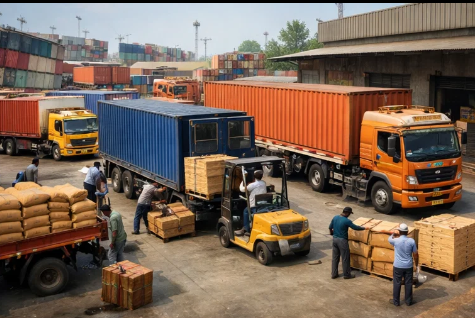
These are fees that apply at the point where your goods start their journey. For road freight, this typically includes pickup charges if the forwarder is collecting from your facility. For air or sea freight, origin charges cover export handling, inland transportation to the port or airport, and documentation preparation fees.
In India, origin charges also include the cost of generating e-way bills for goods valued above a certain threshold. If your transporter or forwarder is handling this on your behalf, that service is often bundled into the origin fee or listed separately as a compliance charge.
Freight Charges
This is the core transportation cost: what it costs to move your goods from origin to destination. For road freight, this is typically calculated either on a per-kilometer basis, on actual weight, or on volumetric weight, whichever is higher.
Volumetric weight is a pricing concept used when goods are bulky but light. Carriers calculate it using the formula:
Volumetric weight = Length x Width x Height (in cm) divided by a divisor
For air freight, the standard divisor is 6,000. For road freight, divisors vary by carrier. Knowing this can help you estimate costs more accurately, especially for large but lightweight shipments like packaged consumer goods or automotive components.
Destination Charges
Once your goods arrive at the delivery point, additional charges kick in. These include unloading fees, last-mile delivery charges if a forwarder is handling drop-off to your distributor or warehouse, and any charges related to documentation at the receiving end.
For imports, destination charges also include customs clearance fees, port handling, and terminal handling charges. For domestic road freight, these are simpler but can still add up, particularly if your delivery points are spread across multiple cities or include unloading in congested urban zones.
Surcharges
Surcharges are where many shippers get caught off guard. Common surcharges in Indian freight include:
Fuel surcharge: Most carriers in India apply a variable fuel surcharge that adjusts monthly or quarterly based on diesel prices. This is typically expressed as a percentage of the base freight rate.
Detention charges: If your vehicle waits at a loading or unloading point beyond the agreed free time window, detention charges apply. These can be steep, often ranging from several hundred to a few thousand rupees per hour, depending on vehicle type.
Toll charges: For road freight, national highway tolls are often passed through to the shipper. Some contracts include this in the base rate, while others treat it as a pass-through line item.
Seasonal surcharges: During peak periods such as festive seasons or agricultural harvest cycles, capacity tightens, and carriers often apply temporary rate increases.
GST and Compliance Costs in Freight Billing
India's GST framework adds a layer of complexity to freight billing that shippers must stay on top of. Transportation of goods by road through a Goods Transport Agency (GTA) is subject to GST, and the liability for paying this tax can fall on either the shipper or the transporter, depending on the nature of the contract and registration status.
Under the reverse charge mechanism, registered businesses receiving freight services from a GTA must pay GST directly to the government rather than to the transporter. This means your actual cost per shipment includes a GST component that you need to account for in your freight budgeting, even if it flows through your input tax credit (ITC) system.
E-way bill compliance is another area that adds both cost and risk. For shipments above Rs. 50,000 in value moving interstate, an e-way bill is mandatory. Expired or incorrect e-way bills can result in penalties, seizure of goods, and significant delays. Shippers who manage large fleets or multiple carriers need systems in place to generate, track, and extend e-way bills in real time.
How a Freight Cost Calculator Can Help
Many shippers rely on rough estimates or historical averages when budgeting freight costs. A structured freight cost calculator approach can help you move beyond guesswork.
A basic freight cost calculation for road freight in India looks like this:
Total freight cost = Base freight rate + Fuel surcharge + Toll charges + Detention (if applicable) + GST
For air or multimodal shipments, add origin and destination handling, customs brokerage, and any port or terminal fees.
The challenge is that each of these components is variable. Base freight rates change with market demand. Fuel surcharges fluctuate with diesel prices. Detention costs depend on ground conditions at your origin and delivery points. Building a freight cost model that accounts for these variables, rather than relying on a flat per-shipment estimate, gives you a more accurate picture of what you are actually spending.
Common Billing Errors to Watch For
Freight invoices are one of the most error-prone documents in logistics operations. Studies across the industry suggest that a significant share of freight bills contain at least one error, ranging from incorrect weight declarations to duplicate charges or unapplied contract rates.
For Indian shippers managing multiple carriers across FTL, PTL, and express services, the volume of invoices can make manual verification impractical. Some of the most common errors include:
- Charging volumetric weight when actual weight applies or vice versa
- Applying incorrect fuel surcharge percentages not aligned with the current rate card
- Double-billing for services already included in the base rate
- Missing or incorrect GST calculations
Automated freight audit systems cross-check each invoice against contracted rates, shipment data, and compliance records. This kind of systematic review can recover significant amounts from overbilling and ensure your freight accounts are accurate before payment is made. For high-volume shippers processing hundreds of invoices each month, even a small percentage of recovered overbilling adds up to meaningful savings over a full year.
Moving Toward Smarter Freight Management
The most forward-thinking logistics teams in India are no longer treating freight cost as a fixed cost to be absorbed. They are treating it as a variable that can be optimised through better data, tighter contracts, and real-time visibility into what is being charged and why.
Digital platforms that unify freight execution, compliance, and billing in one place make this possible. When your dispatch data, e-way bill records, and invoice details live in the same system, reconciliation becomes faster, and errors are caught before payment rather than after.
RoaDo is one such platform that helps manufacturing businesses and transport operators bring freight finance and operations together, giving logistics teams the visibility and control they need to manage freight charges accurately across their supply chain.
Understanding your freight and forwarding charges is not just a finance exercise. It is a strategic and competitive advantage. The businesses that know exactly what they are paying and why are the ones best positioned to negotiate better rates, catch billing errors quickly, and allocate logistics budgets where they deliver the most value to the operation.
Frequently Asked Questions
1. What are freight and forwarding charges in India?
Freight charges cover transportation costs, while forwarding charges include coordination, documentation, and carrier management fees handled by freight forwarders.
2. How are freight charges calculated in India?
Freight is calculated based on distance, actual weight, or volumetric weight, along with additional costs like fuel surcharge, tolls, detention, and GST.
3. What is volumetric weight in freight billing?
Volumetric weight is calculated using shipment dimensions and a divisor, used when goods are bulky but lightweight, to determine accurate pricing.
4. What are common hidden charges in freight invoices?
Hidden charges include fuel surcharges, detention fees, toll charges, documentation fees, and seasonal surcharges that can significantly increase total costs.
5. How can businesses reduce freight billing errors?
Businesses can reduce errors by using digital freight management systems, validating invoices against contracts, and tracking GST, weight calculations, and surcharge accuracy.
“Take control of your freight costs with real-time visibility, accurate billing, and smarter logistics decisions. With RoaDo, start optimizing your supply chain today using a digital platform that simplifies freight management end-to-end.”