
E-Way Bill Rules in India: A Complete Compliance Guide for Transporters (2026)
Key Highlights
- An e-way bill is a mandatory electronic document under India's GST framework, required for transporting goods valued above Rs. 50,000 interstate, and the rules have become stricter and more automated through 2025 and into 2026.
- The 180-day invoice rule, mandatory multi-factor authentication, and the 360-day extension cap are the three most critical compliance changes that every transporter and shipper must understand today.
- E-Way Bill 2.0 portal, launched in July 2025, runs in parallel with the original portal, offering better uptime and real-time data synchronization so that logistics operations are not disrupted by technical outages.
- Non-compliance carries a penalty of Rs. 10,000 or the amount of tax evaded, whichever is higher, along with the risk of vehicle detention and goods seizure.
- Automated e-way bill management, integrated with dispatch and tracking systems, is now the most reliable way for transporters to stay compliant without adding manual overhead to every shipment.
What Is an E-Way Bill and Why Does It Matter?
If you move goods commercially in India, the e-way bill is one document you cannot afford to get wrong. Introduced under the GST regime through Rule 138 of the CGST Rules 2017, an e-way bill is an electronic document that authorizes the legal movement of goods across or within state borders.
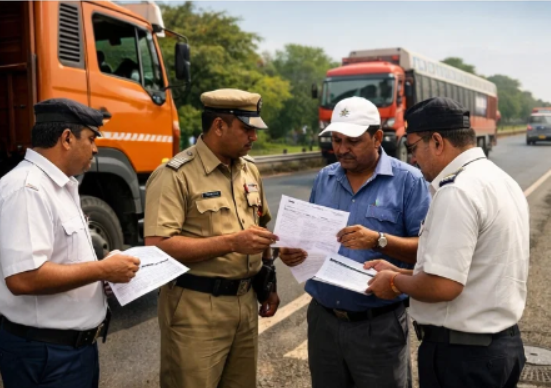
For transporters specifically, the e-way bill is not just a compliance formality. It is your authorization to be on the road with a loaded vehicle. Tax officers at checkpoints can demand to see it at any point during the journey. If you cannot produce a valid one, the consequences are immediate: fines, vehicle detention, or seizure of goods.
The system has evolved significantly since it was first introduced. In 2025 and 2026, enforcement has become more automated and less reliant on manual checks. Understanding the current rules is essential for every transporter, fleet operator, and logistics manager working in India today.
When Is an E-Way Bill Required?
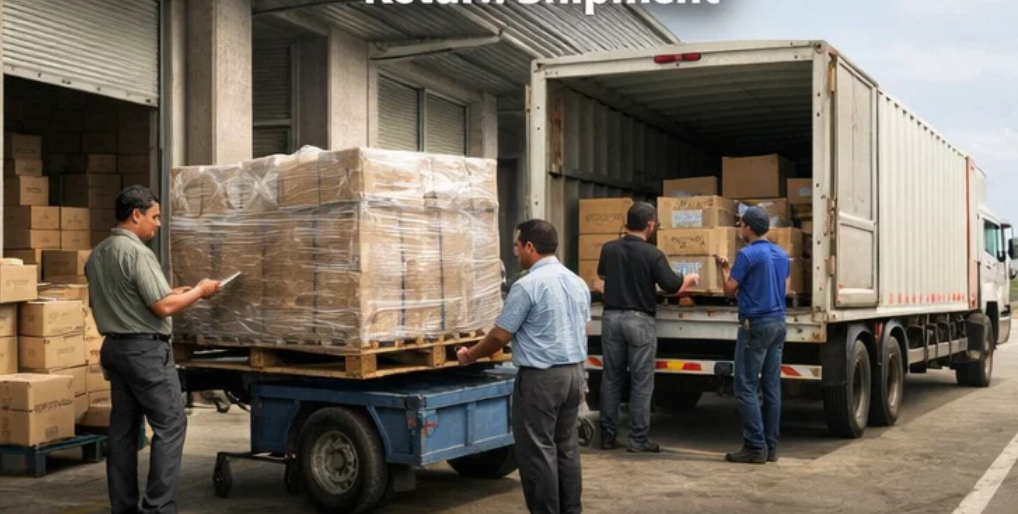
The core threshold remains consistent: an e-way bill is required whenever the value of goods being transported exceeds Rs. 50,000. This applies to both interstate and intrastate movement, though intrastate thresholds vary by state.
For interstate movement, the Rs. 50,000 limit applies uniformly across the country. For intrastate movement, states have the authority to set their own thresholds. Some states like Maharashtra have set higher intrastate limits to ease local logistics, while others follow the standard central limit. Transporters operating across multiple states need to stay updated on the specific rules in each state they serve.
E-way bills are required in three broad situations: when there is a supply of goods, when there is an inward supply from an unregistered person, and when goods are moving for reasons other than a supply, such as a return or a job work transfer.
Some goods are exempt from the requirement. These include non-motorized transport movement, personal luggage carried by passengers on trains or flights, and certain agricultural commodities. However, the exemption list is specific, and transporters should not assume exemption without confirming the applicable HSN code and state rules.
Who Generates the E-Way Bill?
Responsibility for generating an e-way bill follows a clear order.
The registered consignor (the business sending the goods) holds the primary responsibility. If they have not generated it, the registered consignee (the receiving party) must do so. If neither has generated it before the goods are handed over for transport, the transporter is required to generate it based on the invoice or delivery challan provided.
This is an important point for transporters: if a shipper hands you goods without a valid e-way bill, and those goods are above the threshold value, you are legally responsible for ensuring one exists before you begin the journey. Accepting goods without confirming this puts you at direct compliance risk.
For transporters moving multiple consignments in a single vehicle, a Consolidated E-Way Bill in Form GST EWB-02 can be generated, which combines the E-Way Bill Numbers of all individual consignments into one document.
E-Way Bill Validity: Distance-Based Rules Explained
Validity of an e-way bill is calculated based on the distance the goods need to travel.
For regular cargo, the standard rule is one day of validity for every 200 kilometers of travel. For over-dimensional cargo, the rule is one day per 20 kilometers. Validity begins only when Part B of the form is filled in with the vehicle number, marking the actual start of the journey.
A few key points transporters need to know:
Extensions are allowed but capped. If a shipment is delayed due to a vehicle breakdown, adverse weather, or other legitimate reasons, you can extend the validity of an e-way bill. Extensions can be initiated up to 8 hours before or 8 hours after the expiry time. However, since January 2025, the total extension is capped at 360 days from the original date of generation. Once that cap is reached, a new e-way bill must be generated.
Expired e-way bills mean a stopped shipment. If an e-way bill expires while goods are still in transit and you have not extended it, those goods cannot continue moving until the validity is extended or a new bill is raised. Moving goods under an expired e-way bill is a direct compliance violation.
Part B cannot be re-entered. Once Part B is submitted with the vehicle number, it cannot be entered again for the same bill. Only the vehicle number can be updated if there is a change of vehicle mid-journey, such as in cases of transshipment.
Key Compliance Updates for 2025 and 2026
The rules have been tightened considerably in the past year. Here are the changes that matter most for transporters:
180-Day Invoice Rule: Since January 1, 2025, an e-way bill can only be generated for documents dated within 180 days of the generation date. If an invoice is older than six months, the portal will block e-way bill generation for it entirely. This prevents the use of backdated or stale documents, and transporters must ensure shippers are working with current documentation.
Mandatory Multi-Factor Authentication (MFA): As of April 1, 2025, all users must have MFA enabled to access the e-way bill portal. This means logging in now requires a username, password, and an OTP sent to the registered mobile number. If your staff or transport partners do not have updated login credentials and MFA configured, they will be locked out of the portal entirely, causing shipment delays.
E-Way Bill 2.0 Portal: Launched in July 2025, the new portal at ewaybill2.gst.gov.in operates alongside the original portal. Both portals are real-time synchronized, meaning you can generate, update, extend, or cancel e-way bills on either platform. This dual-portal setup was introduced to reduce downtime and improve system reliability for high-volume users.
Automated Portal Validations: In 2026, the system enforces several automatic checks before allowing e-way bill generation. If your GSTIN is inactive or GST returns are pending, the portal blocks generation. Duplicate bills for the same invoice and date are also blocked. This means staying current on your GST return filings is now directly linked to your ability to generate e-way bills and keep goods moving.
Penalties for Non-Compliance
The financial consequences of getting e-way bill compliance wrong are steep.
The minimum penalty is Rs. 10,000 or the equivalent of the tax evaded on the consignment, whichever is higher. For high-value shipments, this can translate into significant losses very quickly. Beyond the monetary penalty, tax officers have the authority to detain both the vehicle and the goods until compliance is established. In serious cases, goods can be seized outright.
Repeated violations are tracked by GSTN, and a record of non-compliance can affect your relationships with shippers, lenders, and business partners. For small and mid-sized transport operators, this kind of reputational damage can be as costly as the fines themselves.
Managing E-Way Bills at Scale
For transporters handling dozens or hundreds of shipments a week, manual e-way bill management is not sustainable. The risk of an expired bill, a missed extension, or a generation failure during a portal downtime is too high when managed entirely by hand.
Integrated logistics platforms now allow transporters to automate e-way bill generation directly from dispatch data, monitor validity in real time, and trigger alerts when a bill is approaching expiry so that extensions can be processed before the shipment is affected. This kind of automation reduces human error and ensures your fleet stays compliant without your team having to track each bill manually.
RoaDo is built for exactly this kind of operational complexity, helping transporters and manufacturers manage e-way bill compliance as part of a broader freight management workflow rather than treating it as a separate, manual task.
E-way bill compliance in India is not getting simpler. The rules are more precise, enforcement is increasingly automated, and the cost of errors is rising. Staying ahead of the current regulations and building systems that handle compliance without relying on manual oversight is the clearest path to running a transport operation that is both efficient and penalty-free.
Frequently Asked Questions
1. What is the minimum value for generating an e-way bill in India?
An e-way bill is required when the value of goods exceeds ₹50,000 for interstate movement, while intrastate thresholds may vary depending on state-specific rules.
2. How is e-way bill validity calculated?
Validity is based on distance 1 day per 200 km for regular cargo and 1 day per 20 km for over-dimensional cargo, starting only after Part B entry.
3. Can an expired e-way bill be extended?
Yes, extensions are allowed within 8 hours before or after expiry, but the total extension period cannot exceed 360 days from the original generation date.
4. Who is responsible for generating the e-way bill?
The consignor generates it first; if not, the consignee must. If neither does, the transporter becomes responsible before starting the shipment.
5. What happens if an e-way bill is not valid during transit?
Goods movement is stopped immediately, and penalties of ₹10,000 or tax amount (whichever is higher) may apply, along with possible vehicle detention or seizure.
“Eliminate e-way bill errors and keep every shipment compliant with automated, real-time management built for modern logistics. Streamline operations, avoid penalties, and move freight with complete confidence using a smarter digital workflow powered by RoaDo.”