Logistics Control Tower vs TMS vs ERP: Which One Does What (And What You Actually Need)
Key Highlights
- ERP systems manage business records, TMS handles freight execution, and control towers provide the orchestration layer.
- India aims to reduce logistics costs from 14% to 8% of GDP by 2030 through digital integration.
- A logistics control tower provides real-time visibility across fragmented carrier networks without replacing existing ERPs.
- Automated freight audit and reconciliation can reduce billing cycles by up to 65%.
What Is a Logistics Control Tower?
A logistics control tower is a centralized hub that integrates data from across your entire supply chain to provide real-time visibility and decision-making support. Unlike traditional systems that focus on a single task, the control tower acts as an orchestration layer, pulling information from your ERP, TMS, and external carriers to show you exactly where your goods are and where the bottlenecks lie.
In the complex debate of Logistics Control Tower vs TMS vs ERP, it is essential to realize that these are not competing tools but complementary layers of a modern technology stack. A control tower does not store your financial records or book your trucks; instead, it watches how those actions interact and alerts you when a delay in one system will cause a failure in another.
When logistics experts call a control tower an orchestration layer, they mean it is a software skin that talks to all your other tools so you don't have to log into five different screens to find one shipment.
TMS vs ERP: Why One Cannot Replace the Other?
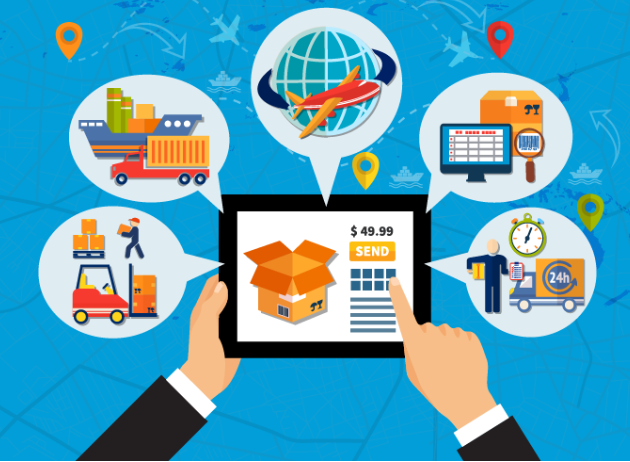
The confusion between TMS vs ERP often stems from the fact that many modern ERPs have light transportation modules. However, their core functions are fundamentally different. An Enterprise Resource Planning (ERP) system is the financial and operational system of record for a company. It handles procurement, inventory, and order management. It tells you what needs to be shipped and when it needs to arrive at the customer’s door.
A Transportation Management System (TMS), on the other hand, is built for the how. It is an execution tool for procuring freight, optimizing routes, and managing carrier performance. While an ERP sees an order, a TMS sees a load. In the Indian context, where logistics costs remain high at 13-14% of GDP, relying solely on an ERP for logistics often leads to manual tracking and inefficient route planning. A TMS fills this gap by focusing on the minute-by-minute execution of moving goods from point A to point B.
Control Tower vs TMS: Aren't They the Same Thing?
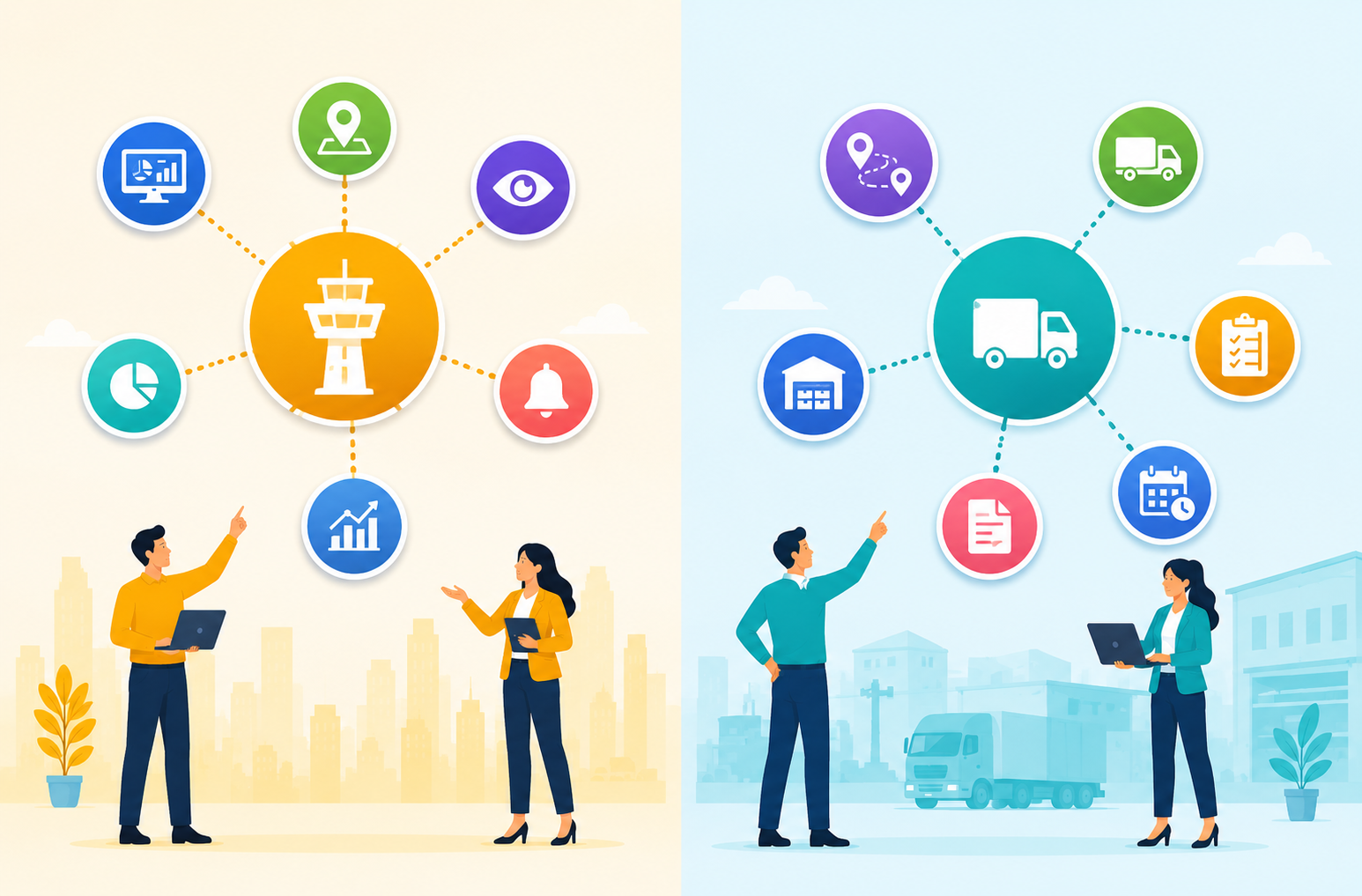
No, and understanding this is critical for scaling operations. A TMS is inherently inward-looking; it manages the data and carriers you have directly plugged into it. A logistics control tower is outward-looking. It correlates data from your TMS with external factors such as weather and port congestion, as well as GPS data from third-party transporters who may not be on your TMS.
The primary differentiator here is exception management. A TMS will tell you that a truck was dispatched. A control tower will tell you that the truck is 40 km off-route, the driver’s VAHAN compliance has expired, and the delay will cause a ₹2 lakh production stoppage at your plant. By integrating with the Unified Logistics Interface Platform (ULIP), which has processed over 160 crore transactions, modern control towers provide a level of data depth that a standalone TMS cannot match.
Why Does This Distinction Matter for Indian Manufacturers?
For Indian enterprises, the logistics landscape is uniquely fragmented. Most manufacturers deal with hundreds of small-scale transporters who do not own sophisticated tracking hardware. This is where a hardware-free freight operating system becomes a game-changer. By using SIM-based or browser-based tracking, platforms like RoaDo provide control-tower-level visibility without requiring every truck to have a GPS device installed.
Furthermore, the National Logistics Policy (NLP) 2022 emphasizes ease of logistics through digital integration. A control tower helps companies stay compliant with these shifting regulations by automating VAHAN and GSTN checks.
How to Choose the Right Layer for Your Operation?
If your primary struggle is keeping track of your company's accounts and inventory, your gap is the ERP. If you find it difficult to assign loads to carriers or calculate freight rates, you need a TMS. However, if you already have these systems but still face black box transit periods, high detention costs, and manual follow-ups, you are missing a logistics control tower.
Exception Management refers to the process of the system only alerting you when something goes wrong (like a delay or a route deviation), so you don’t have to manually watch every on-time shipment.
Platforms like RoaDo are designed as a modular freight operating system to bridge these gaps. By automating the freight audit and reconciliation process, RoaDo has helped organizations achieve a 65% faster billing cycle and a 5–10% reduction in total freight costs. In an era where the government is pushing for a digital-first logistics ecosystem, having a layer that unifies your ERP and TMS data is no longer a luxury; it is a requirement for staying competitive.
Conclusion
Choosing between a logistics control tower, a TMS, and an ERP is not about picking one winner but about building a cohesive digital stack that removes operational blind spots. Your ERP provides the business foundation, the TMS manages the freight execution, and the control tower ensures that every stakeholder has the real-time visibility needed to prevent costly delays. As India moves toward its goal of reducing logistics costs to 8% of GDP, the ability to orchestrate data across these systems will become the primary differentiator for successful manufacturers. Companies must stop viewing these tools in isolation and start integrating them to build a resilient, data-driven supply chain. Freight operating systems like RoaDo are designed to facilitate this exact transition, turning fragmented data into a strategic advantage for the modern enterprise.
Frequently Asked Questions
- What is the main difference between a logistics control tower and a TMS?
A TMS focuses on executing and optimizing transport, while a control tower provides visibility and orchestration across multiple systems and carriers. - Does a control tower replace my existing ERP?
No, a control tower sits on top of your ERP to provide real-time operational insights that an ERP's financial focus cannot capture. - Can a logistics control tower help with e-way bill compliance?
Yes, by integrating with GSTN and VAHAN, a control tower can automate compliance checks and prevent penalties. - Is a supply chain control tower different from a logistics control tower?
A supply chain control tower covers everything from procurement to manufacturing, while a logistics control tower focuses specifically on the movement of goods. - How does a control tower reduce logistics costs?
It identifies inefficiencies like excessive detention and route deviations, allowing managers to act before costs escalate. - Do I need a control tower if I only have a small fleet?
Even small fleets benefit from control towers if they manage multiple third-party transporters with inconsistent tracking capabilities. - Can a control tower work without GPS hardware?
Yes, modern systems like RoaDo use SIM-based and browser-based tracking to provide visibility without physical devices. - What is the ROI of a logistics control tower?
Common outcomes include a 7–10 day reduction in DSO and significant savings on manual audit time.
Unify your ERP, TMS, and carrier data with RoaDo to gain real-time logistics visibility and eliminate supply chain blind spots. Automate freight audits, streamline compliance, and proactively manage exceptions from a single intelligent control tower.