
The Freight Forwarding Process Step by Step: From Booking to Final Delivery
Key Highlights:
- The freight forwarding process involves several distinct steps, from the initial booking to final delivery, each requiring careful coordination between multiple parties.
- A freight forwarder manages documentation, carrier selection, customs clearance, and tracking on behalf of the shipper, acting as a single point of contact throughout the journey.
- Understanding each step in the freight forwarding workflow helps manufacturers avoid costly delays, compliance errors, and miscommunication with logistics partners.
- The process differs for export and import shipments, with cross-border moves involving customs compliance at both origin and destination.
- Technology is playing a growing role in streamlining the freight forwarding workflow, reducing manual effort and improving visibility at every stage.
Why Understanding the Freight Forwarding Process Matters
Most manufacturers know they need a freight forwarder. Fewer understand exactly what happens between the moment a shipment is booked and the moment it arrives at its destination.
That gap in understanding creates problems. When something goes wrong, and in logistics, something always eventually goes wrong, manufacturers who do not know the process have no way to identify where the breakdown occurred or how to prevent it from happening again.
Understanding the freight forwarding process step by step gives you a clearer picture of where your goods are, who is responsible for what, and how to hold your logistics partners accountable. It also helps you plan more accurately, set realistic delivery expectations for your customers, and make smarter decisions when evaluating freight partners.
This guide walks through the entire process in plain language, from the first booking to the final delivery confirmation.
Export vs Import: What’s the Difference?
- Export shipments focus on origin-side compliance, documentation, and outbound customs clearance.
- Import shipments focus on destination customs clearance, duties, and last-mile coordination.
- Freight forwarders play a critical role in both directions, acting as coordinators between shippers, consignees, and authorities.
Step 1: Inquiry and Quotation
Every freight forwarding engagement begins with an inquiry. As a shipper, you approach a freight forwarder with the details of your shipment: origin, destination, type of goods, weight, dimensions, required delivery date, and any special handling requirements.
Based on this information, the freight forwarder assesses the best route and mode of transport, whether that is road, rail, air, sea, or a combination. They then provide a quotation that outlines the cost, estimated transit time, and any conditions attached to the shipment.
This stage is more important than it looks. The accuracy of the information you provide directly affects the quality of the quote. Incorrect cargo dimensions, undeclared hazardous materials, or vague delivery requirements can lead to cost revisions, delays, or compliance issues later in the process.
A good freight forwarder will ask detailed questions at this stage. One that simply accepts your input without probing is a warning sign.For import shipments, this stage may also involve coordination with overseas suppliers and destination-side requirements.
Step 2: Booking Confirmation and Documentation Preparation
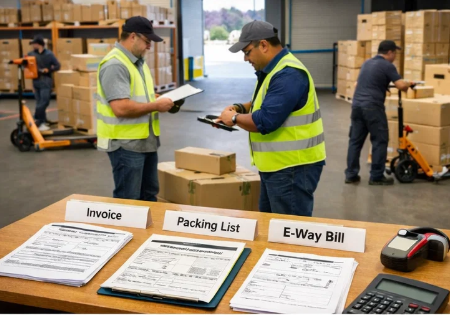
Once you accept the quote, the freight forwarder confirms the booking with the relevant carrier or carriers. This could be a trucking company, a shipping line, an airline, or a rail operator, depending on the mode of transport.
Simultaneously, the documentation process begins. This is one of the most critical parts of the freight forwarding workflow. The exact documents required will vary depending on the shipment type and destination, but typically include the following:
- Commercial invoice
- Packing list
- Bill of lading or airway bill
- Certificate of origin
- E-way bill (for domestic shipments in India)
- Customs declaration forms (for international shipments)
- GST-related documentation, where applicable
For import shipments, these documents are usually prepared by the exporter but must be carefully verified by the freight forwarder to ensure smooth customs clearance at the destination.
Errors in documentation are one of the leading causes of shipment delays. A missing field on a customs form or an incorrect HS code can hold up a shipment at the border for days. Experienced freight forwarders have established checklists and verification processes to minimize these risks.
At this stage, the freight forwarder will also confirm pickup arrangements with your facility and coordinate with the carrier on loading schedules.
Step 3: Cargo Pickup and Pre-Shipment Inspection
With the booking confirmed and documents in order, the carrier arrives at your facility to pick up the goods (for export shipments) or collects the cargo from the port, airport, or warehouse after arrival (for import shipments). Depending on the nature of the shipment and the requirements of the destination country or customer, a pre-shipment inspection may take place at this point.
The freight forwarder coordinates the loading process, ensuring that the cargo matches the documentation, that packaging meets the requirements of the chosen transport mode, and that weight and dimensions are accurately recorded.
For manufacturers shipping fragile, hazardous, or high-value goods, this stage requires particular attention. Improper loading or packaging at this point can result in damage in transit, claims disputes, or customs rejection at the destination.
Once the cargo is loaded and the vehicle departs, the freight forwarder updates the shipment records and initiates tracking.
Step 4: Freight Movement and In-Transit Tracking
This is the stage where the physical movement of goods takes place. Depending on the shipment, this could involve a single truck journey or a complex sequence of road, port, ocean, and final mile legs.
Throughout this stage, the freight forwarder is responsible for monitoring the shipment and keeping the shipper informed. A good forwarder provides proactive updates at key milestones: departure confirmation, arrival at transit hubs, port loading, and estimated arrival at the destination.
In modern logistics, real-time tracking is increasingly expected. Manufacturers want to know where their goods are at any point in time, not just at scheduled checkpoints. Technology platforms that offer continuous visibility, even without GPS hardware installed on vehicles, have made this level of tracking accessible for a wider range of shipments.
When disruptions occur, whether a vehicle breakdown, a weather delay, or a port congestion issue, the freight forwarder is expected to identify alternatives and communicate them quickly. This is where experience and network depth separate strong forwarders from average ones.
Step 5: Customs Clearance (For International Shipments)
Customs clearance occurs at both export and import stages in international shipments. Export clearance is handled at the origin before departure, while import clearance is completed at the destination before final delivery. It is one of the most complex and consequential steps in the entire process. The freight forwarder acts as the customs broker, filing the necessary declarations on your behalf and ensuring the cargo meets the import and export regulations of the relevant countries.
This involves submitting the correct documentation, paying applicable duties and taxes, and obtaining any required permits or certificates. In India, this also means navigating the requirements of the Customs Act, coordinating with port and airport authorities, and in some cases managing physical inspections.
Delays at customs are common and can be expensive. They typically result from incomplete documentation, incorrect tariff classification, or missing permits. A freight forwarder with strong customs expertise and established relationships with clearing agents can significantly reduce the risk of these delays.
For manufacturers new to exporting or importing, this step alone is often reason enough to work with a professional freight forwarder rather than trying to manage the process independently.
Step 6: Arrival at Destination and Last-Mile Delivery
Once the shipment clears customs or arrives at the domestic destination hub, the freight forwarder coordinates the final leg of the journey. This involves arranging last-mile delivery to the consignee's address, whether that is a warehouse, a distributor, a retail location, or a manufacturing plant.In import shipments, this is often the most critical stage, as delays in customs clearance directly impact final delivery timelines.
At this stage, the forwarder ensures that delivery appointments are scheduled, that the carrier has the correct delivery instructions, and that the consignee is ready to receive the goods. For shipments requiring special unloading equipment or cold chain conditions, these requirements must be confirmed in advance.
Communication between the freight forwarder, the carrier, and the consignee is critical here. A breakdown in coordination at the last mile is a surprisingly common cause of delivery failures, even when everything else in the chain has gone smoothly.
Step 7: Proof of Delivery and Shipment Closure
Once the goods are delivered, the consignee signs the proof of delivery (POD) document, confirming receipt. The POD is a critical record. It confirms that the shipment was delivered in the expected condition and quantity, and it triggers the invoicing and payment process.
In traditional logistics, POD is still paper-based in many operations, which slows down billing cycles and creates reconciliation challenges. Digital proof of delivery systems, which capture signatures and photos electronically at the point of delivery, have significantly improved this process for manufacturers who have adopted them.
With the POD in hand, the freight forwarder closes the shipment file, issues the final invoice, and reconciles any additional charges that may have been incurred during transit.
Step 8: Freight Invoice Reconciliation and Settlement
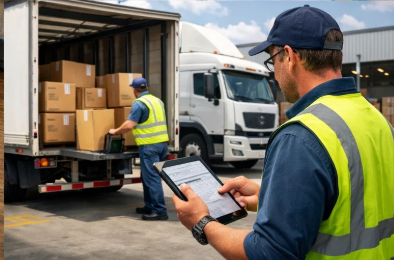
The final step in the freight forwarding process is financial settlement. The freight forwarder issues an invoice covering the agreed charges plus any additional costs incurred during the shipment. These might include detention charges, storage fees, customs penalties, or fuel surcharges.
For manufacturers managing a large number of shipments, this step is where significant money is often lost. Manual invoice verification is slow and prone to errors. Charges are sometimes applied incorrectly, or additional fees are added without clear justification.
Automated freight invoice auditing, which matches invoices against contracted rates and flags discrepancies automatically, is one of the most valuable capabilities a freight management platform can offer. It protects manufacturers from overbilling and reduces the time spent on manual reconciliation.
Freight Forwarder’s Role in Import Shipments
- Coordinates with overseas exporters and agents.
- Manages import customs clearance and duties.
- Ensures compliance with local regulations.
- Arranges port handling and last-mile delivery.
- Handles documentation verification and discrepancy resolution.
Conclusion
The freight forwarding process is more layered than it appears from the outside. This applies to both export and import shipments, each with its own complexities and compliance requirements.
Each step, from the initial booking to the final invoice, requires coordination, accuracy, and clear communication between multiple parties. When any one of these steps breaks down, the consequences ripple through the entire supply chain.
For manufacturers looking to take greater control of this process, the combination of an experienced freight forwarding partner and a robust logistics platform makes a significant difference. Tools like RoaDo are designed to bring visibility and structure to every stage of the freight journey, helping manufacturers stay informed, stay compliant, and stay in control from the first booking to the final delivery.
The more clearly you understand how the process works, the better positioned you are to make it work for your business.
Frequently Asked Questions
1. What does a freight forwarder do in the shipping process?
A freight forwarder manages the entire shipment lifecycle, including booking, documentation, carrier coordination, customs clearance, tracking, and final delivery as a single point of contact.
2. What documents are required for freight forwarding?
Common documents include a commercial invoice, packing list, bill of lading or airway bill, certificate of origin, e-way bill, and customs declarations, depending on shipment type.
3. How long does the freight forwarding process take?
Timelines vary based on distance, transport mode, customs clearance, and route complexity, ranging from a few days for domestic shipments to several weeks for international ones.
4. What causes delays in freight forwarding?
Delays usually occur due to documentation errors, customs clearance issues, port congestion, weather disruptions, or poor coordination between logistics stakeholders.
5. How can manufacturers improve freight forwarding efficiency?
Using experienced forwarders and digital logistics platforms improves visibility, automates documentation, reduces errors, and ensures smoother coordination across the entire shipment process.
6. What is the role of a freight forwarder in import shipments?
A freight forwarder manages destination customs clearance, coordinates with overseas partners, handles documentation verification, and ensures smooth last-mile delivery to the consignee.
“Take control of every step in your freight journey with complete visibility, smarter coordination, and fewer costly errors. Simplify operations and move shipments with confidence using RoaDo, a platform built for end-to-end logistics efficiency.”