
10 Proven Strategies to Reduce Freight Costs for Indian Supply Chains
Key Highlights:
- Freight costs are one of the largest controllable expenses in any manufacturing supply chain, and small improvements across multiple areas can add up to significant annual savings.
- Indian manufacturers face specific cost pressures including fuel price volatility, compliance overhead, transporter fragmentation, and inefficient billing processes that drive up logistics spend.
- Strategies like load optimization, route planning, carrier consolidation, and freight invoice automation can deliver measurable cost reductions without compromising service quality.
- Technology plays a central role in modern freight cost management, giving manufacturers the data they need to identify waste, negotiate better rates, and make smarter decisions.
- Sustainable freight cost reduction is not about cutting corners. It is about building a smarter, more visible, and better-managed supply chain.
The Real Cost of Inefficient Freight Management
Ask most manufacturers what their biggest logistics challenge is, and freight costs will be near the top of the list. In India, freight spend typically accounts for a significant portion of total operating costs, especially for businesses running large distribution networks across multiple regions.
What makes this particularly frustrating is that a lot of this spend is avoidable. Trucks running half-empty, invoices being paid without proper verification, routes chosen out of habit rather than analysis, and compliance errors causing costly delays are all problems that show up repeatedly across Indian supply chains.
The good news is that freight cost reduction does not require a complete overhaul of your operations. In many cases, targeted improvements in how you plan, execute, and manage freight can deliver meaningful savings within months.
Here are ten strategies that work.
1. Optimize Load Planning to Maximize Truck Utilization
One of the most direct ways to reduce transportation costs in your supply chain is to make sure every truck leaving your facility is as full as it can be. Partially loaded trucks are one of the most common and most avoidable sources of freight waste.
Load optimization involves planning shipments so that available truck space is used efficiently, both in terms of weight and volume. This requires visibility into your outbound orders, the ability to group shipments heading in the same direction, and a clear picture of the capacity available across your carrier network.
AI-driven load planning tools can now automate much of this process, calculating the most efficient loading patterns and flagging opportunities to consolidate shipments that would otherwise move separately.
Even a modest improvement in average truck utilization across your fleet can translate into a substantial reduction in per-unit freight costs over the course of a year.
2. Consolidate Shipments Where Possible
Related to load optimization is the practice of shipment consolidation. Instead of sending multiple small shipments to the same destination on different days, consolidating them into a single, larger movement reduces the number of trips and the total freight cost.
This is particularly relevant for manufacturers supplying distributors or retail customers on a regular basis. Reviewing your outbound shipment patterns and identifying consolidation opportunities is a straightforward exercise that often reveals quick wins.
For smaller volumes that do not justify a full truck, part truck load options and freight consolidation services allow you to share transport costs with other shippers, reducing your spend without sacrificing delivery timelines.
3. Use Data to Negotiate Better Carrier Rates
Many manufacturers negotiate freight rates based on gut feel or historical relationships rather than hard data. This leaves money on the table.
When you have clear visibility into your freight volumes by lane, carrier performance metrics, and market rate benchmarks, you are in a much stronger position during contract negotiations. Carriers respond to data. If you can demonstrate consistent volumes on a specific lane and show that a competitor is offering better rates, you have real leverage.
Building this data foundation requires a freight management system that tracks every shipment, records actual costs against contracted rates, and generates lane-level reports. Without this, logistics cost optimization remains guesswork.
4. Diversify Your Carrier Base
Relying too heavily on a single carrier or a small group of transporters limits your negotiating power and increases your operational risk. If your primary carrier has a bad month, your entire supply chain feels it.
Maintaining a diversified panel of pre-qualified carriers gives you flexibility in both pricing and capacity. You can allocate loads based on performance and cost, create healthy competition among carriers, and ensure continuity when one partner faces challenges.
This does not mean working with an unmanageable number of carriers. A well-structured carrier panel, where performance is tracked and allocations are reviewed regularly, strikes the right balance between diversity and manageability.
5. Automate Freight Invoice Auditing
Overbilling by carriers is more common than most manufacturers realize. Incorrect rates, duplicate charges, unauthorized surcharges, and billing errors can quietly inflate your freight spend month after month.
Manual invoice verification is slow and unreliable. When your team is processing hundreds of invoices, errors get missed. Automated freight invoice auditing solves this by matching every invoice against contracted rates, flagging discrepancies, and routing exceptions for review before payment is approved.
The savings from this single step can be substantial. Manufacturers who implement automated invoice auditing often discover they have been overpaying by a meaningful percentage of their total freight bill, without ever knowing it.
6. Improve Route Planning with Technology
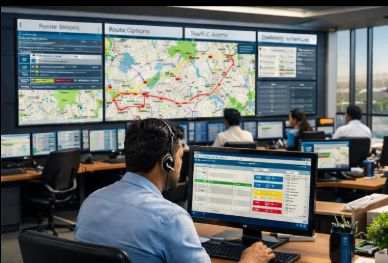
Choosing the right route for each shipment has a direct impact on fuel costs, transit times, and driver productivity. Yet many Indian manufacturers still rely on drivers or dispatchers making route decisions based on experience and habit rather than data.
Modern route optimization tools analyze multiple variables including distance, road conditions, delivery time windows, and vehicle capacity to recommend the most efficient route for each shipment. Over a large number of trips, this adds up to measurable reductions in fuel consumption and vehicle wear.
Route planning technology also helps reduce detention costs, which occur when trucks are delayed at loading or unloading points. Better scheduling and communication between dispatch, drivers, and consignees reduces waiting time and keeps vehicles moving.
7. Reduce Detention and Idle Time
Detention charges are a hidden but significant cost in many supply chains. When a truck arrives at a facility and has to wait because loading is not ready, or when a driver is delayed at a customer site, the clock is running and the costs add up.
Reducing detention starts with better planning: ensuring loading bays are ready when trucks arrive, communicating delivery windows clearly to consignees, and tracking turnaround times at each facility to identify where the delays are concentrated.
Real-time visibility into vehicle locations and estimated arrival times helps logistics teams prepare for incoming shipments and avoid the bottlenecks that lead to detention charges.
8. Digitize Compliance to Avoid Penalties and Delays
In India, compliance errors are a significant but often overlooked driver of logistics costs. A missing or incorrect e-way bill can result in goods being detained at a checkpoint. GST documentation errors can delay payments and create reconciliation headaches. VAHAN verification issues can hold up vehicles.
Each of these situations has a direct cost, whether it is a penalty, a delayed delivery, or the time your team spends resolving the issue.
Automating compliance workflows through a logistics platform that integrates with GSTN, VAHAN, and other regulatory systems eliminates most of these risks. When e-way bills are generated automatically, vehicle compliance is verified in real time, and documentation is linked directly to shipment records, the compliance overhead drops significantly.
9. Track and Reduce Freight Cost Per Unit
Many manufacturers track their total freight spend but do not break it down to a per-unit or per-shipment level. Without this granularity, it is very difficult to identify where your supply chain cost reduction opportunities actually are.
Tracking freight cost per unit, per lane, per carrier, and per product category gives you a much clearer picture of where money is being spent and where it is being wasted. It also helps you have more informed conversations with your sales and operations teams about pricing, customer service levels, and distribution strategy.
A good freight management system makes this level of analysis straightforward, pulling together data from across your logistics operations and presenting it in dashboards that make trends and outliers easy to spot.
10. Build Long-Term Carrier Partnerships

Short-term, transactional relationships with carriers tend to be more expensive than long-term partnerships built on volume commitments and mutual trust. Carriers offer better rates and prioritize capacity for shippers who provide consistent business and pay on time.
Investing in carrier relationships means more than just signing annual contracts. It means sharing shipment forecasts so carriers can plan their capacity, providing clear and timely feedback on performance, resolving disputes fairly, and making payments promptly.
Manufacturers who treat their carrier relationships as strategic partnerships rather than transactional arrangements consistently achieve better rates, better service, and better resilience when the market gets tight.
Conclusion
Reducing freight costs in an Indian supply chain is not about making one big change. It is about making many smaller improvements across planning, execution, compliance, and financial management, and then measuring the impact of each one carefully.
The manufacturers who do this consistently are the ones who build a genuine competitive advantage through logistics, turning what is often seen as a cost center into a source of operational strength.
Platforms like RoaDo are built to support exactly this kind of systematic improvement, giving manufacturers the visibility, automation, and analytics they need to manage freight costs with confidence and precision.
Frequently Asked Questions
1. What is the most effective way to reduce freight costs in India?
Improving truck utilization through load optimization and shipment consolidation is one of the fastest ways to cut freight costs without affecting delivery performance.
2. How does technology help in freight cost reduction?
Technology provides real-time visibility, automates processes like routing and invoicing, and enables data-driven decisions that reduce inefficiencies and unnecessary logistics spend.
3. Why is freight invoice auditing important?
It helps identify overbilling, duplicate charges, and rate mismatches, ensuring you only pay what was agreed upon and preventing hidden cost leakage.
4. How can better route planning reduce logistics costs?
Optimized routes lower fuel consumption, reduce transit time, and minimize detention, leading to overall savings in transportation expenses.
5. Why are long-term carrier partnerships beneficial?
They offer better rates, reliable capacity, and improved service levels, helping businesses maintain cost efficiency and operational stability over time.
“Take control of your freight costs with smarter planning, real-time visibility, and automated workflows built for scale. Start optimizing every shipment, reducing waste, and improving margins with a data-driven logistics approach powered by RoaDo.”