What Is a Shipment Visibility Platform and How Is It Different from a TMS?
Key Highlights
- Visibility platforms provide real-time data on shipment location and condition.
- TMS focuses on planning freight, while visibility monitors post-dispatch movement.
- Freight visibility software and TMS solutions are complementary tools, not direct replacements for each other, and many businesses benefit from using both together.
- Supply chain visibility software helps reduce delays, improve customer communication, and lower the cost of manual follow-ups across the logistics chain.
Why the Confusion Exists
Choosing the right shipment visibility platform or TMS is often the first hurdle in digitizing your supply chain. You have likely come across two terms that seem to do similar things: a transportation management system and a shipment visibility platform. Both deal with freight. Both involve tracking. Both promise to make your logistics operations more efficient.
So why are they different products? And more importantly, which one does your business actually need?
The confusion is understandable. Over the past few years, visibility features have been added to TMS solutions, and some visibility platforms have expanded into planning territory. The lines have blurred. But the core purpose of each tool is still quite distinct, and understanding that distinction will help you make a much better decision about what to invest in.
What Is a TMS in Logistics?
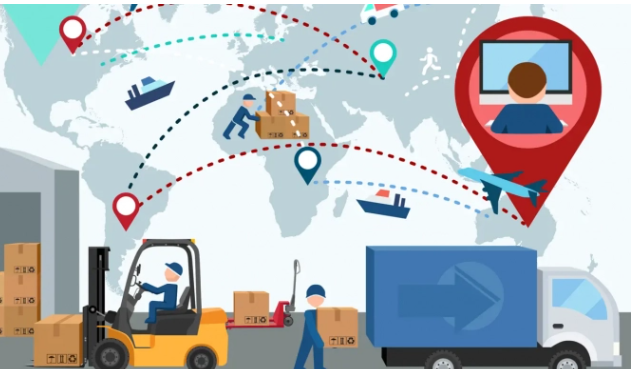
A transportation management system, commonly called a TMS, is software designed to help businesses plan, execute, and manage the movement of freight. It is primarily a planning and execution tool.
At its core, a TMS in logistics handles the operational side of freight management. This includes selecting carriers based on rates and capacity, generating shipping documents, optimizing routes, managing freight spend, and coordinating pickups and deliveries. In some cases, it also handles load tendering, carrier contracts, and rate comparisons.
Think of a TMS as the control room for decisions made before and during a shipment. It answers questions like "Which carrier should we use?" What is the most cost-effective route? How do we consolidate these three orders into one truckload?
TMS platforms are powerful tools, particularly for companies managing large freight volumes, multiple carriers, or complex distribution networks. They bring structure and consistency to freight planning, which would otherwise rely heavily on spreadsheets and phone calls.
However, a traditional TMS is not always designed to tell you, in real time, exactly where your shipment is right now, or whether there is a risk of it being delayed. That is where a supply chain visibility platform comes in.
What Is a Supply Chain Visibility Platform?
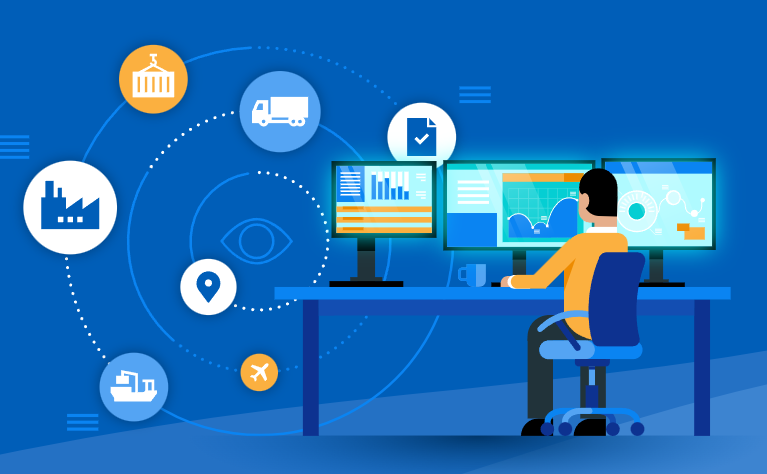
A supply chain visibility platform is software built to monitor freight in motion and deliver real-time information to every stakeholder who needs it. Its primary job is not to plan a shipment but to track it, interpret what is happening, and surface the right information at the right time.
Freight visibility software connects with GPS data, carrier systems, government portals, and other data sources. RoaDo’s Freight Operating System (FOS) achieves this through SIM and browser-based tracking, eliminating the need for dedicated GPS hardware.
Beyond simple location tracking, a supply chain visibility platform also handles exception alerts. If a truck deviates from its planned route, if a delivery is running late, or if a compliance document is about to expire, the platform flags it and notifies the right person. Modern visibility platforms also integrate with VAHAN and GSTN to automate vehicle fitness checks and e-way bill compliance.
This is the key difference in purpose. A TMS helps you plan and execute. A visibility platform helps you monitor, alert, and respond.
Supply chain visibility software is also designed with multiple stakeholders in mind. It can give consignees a live update on when their goods will arrive, help finance teams track POD completion for billing purposes, and give senior management a consolidated view of fleet performance across all routes.
Where They Overlap and Where They Diverge
Modern TMS platforms often include basic tracking features, and some supply chain visibility platforms include light planning tools. The market has evolved, and these categories are no longer entirely separate.
But the overlap is mostly at the surface level. A TMS with basic tracking can show you where a shipment is, but it may not have the intelligence to detect exceptions, alert the right stakeholders proactively, or integrate with real-time external data sources like traffic feeds or compliance databases.
Similarly, a visibility platform can show you what is happening across your freight network, but it is not built to handle deep planning and procurement workflows. You would not use freight visibility software to run a reverse auction for carrier rates or to consolidate loads and optimize a dispatch plan.
Why Visibility Has Become a Priority on Its Own
For a long time, logistics teams accepted that once a truck left the gate, visibility was limited. You called the driver. You waited for the transporter to check in. You found out about a late delivery when the consignee called to complain.
That model no longer works for businesses expected to deliver on tight SLAs, manage complex multi-stop shipments, and provide customers with accurate ETAs.
Supply chain visibility software emerged to fill that gap. As mobile networks improved and GPS and SIM-based tracking became more accessible, it became possible to track shipments across the entire journey without installing expensive hardware or asking drivers to use specialized apps.
The business case is clear. Late deliveries lead to detention charges, penalty clauses, and strained customer relationships. Manual follow-ups consume time that logistics teams could spend on higher-value work. Billing disputes arise when ePOD (Electronic Proof of Delivery) is missing or inaccurate. Each of these problems has a direct cost, and a supply chain visibility platform addresses all of them.
How to Decide What Your Business Needs
If your primary challenge is in freight planning, carrier selection, rate management, or load optimization, a TMS is likely the right starting point. It will bring structure to decisions that are currently made manually or inconsistently.
If your primary challenge is knowing what is happening to your shipments after they leave, communicating accurate ETAs to customers, managing exceptions in real time, and reducing the time your team spends chasing status updates, then a supply chain visibility platform is what you need.
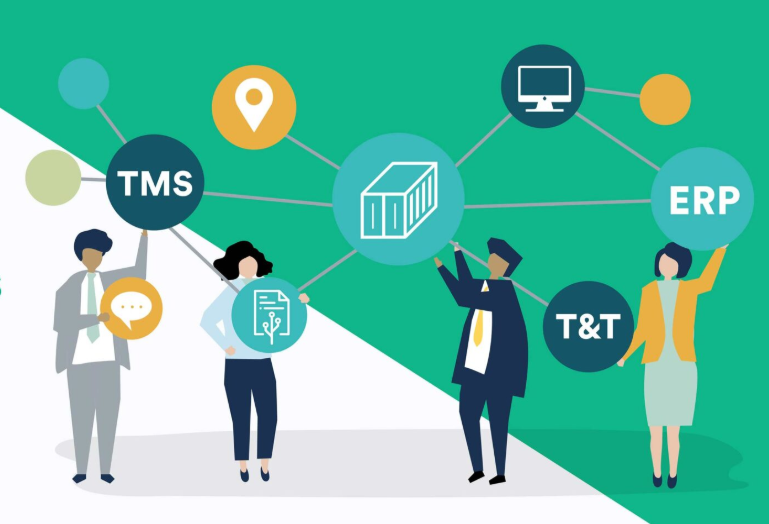
Many businesses find that they need both. A TMS handles the planning. A visibility platform handles the monitoring. When the two are integrated, the result is a logistics operation that can plan intelligently and respond quickly.
Modern freight visibility software is designed to work alongside existing systems. It does not require replacing your current TMS. It connects to it, pulls in shipment data, and adds the real-time layer that most TMS solutions are not built to provide on their own.
The Real Value Is in the Data
Both a TMS and a supply chain visibility platform increase in value significantly with data quality and volume. The more trips that run through a visibility platform, the better its understanding of carrier performance, lane-level delays, and risk patterns.
Over time, this data becomes the foundation for smarter decisions across the entire logistics operation. You move from asking "where is my shipment?" to "why does this lane consistently underperform?" That shift, from reactive to analytical, is what separates a logistics team that manages freight from one that actually optimizes it.
Conclusion
A TMS and a supply chain visibility platform are not the same thing, even though they are often grouped together in conversations about logistics software. A TMS is built to plan and execute freight. A visibility platform is built to monitor, alert, and inform.
For businesses that want to reduce delays, improve customer communication, and stop wasting time on manual follow-ups, investing in supply chain visibility software is one of the most practical steps they can take.
While businesses often choose between a TMS and a visibility platform, modern Freight Operating Systems (FOS) like RoaDo unify planning, execution, visibility, and compliance into a single system.
The question is not whether visibility matters. It clearly does. The question is how quickly your team can get access to the data it needs to make faster, smarter decisions every single day.
Frequently Asked Questions
- What is a shipment visibility platform?
It is software that provides real-time tracking and updates on shipments across the entire journey. - What does a TMS do in logistics?
A TMS helps plan, execute, and optimize freight movement, including carrier selection and route planning. - How is a visibility platform different from a TMS?
A visibility platform tracks and monitors shipments, while a TMS focuses on planning and execution. - Can a business use both TMS and visibility software?
Yes, many companies use both together for better planning and real-time monitoring. - Does a TMS provide real-time tracking?
Some TMS solutions offer basic tracking, but they often lack advanced real-time visibility features. - Why is shipment visibility important?
It helps reduce delays, improve communication, and minimize manual follow-ups in logistics operations. - Do visibility platforms require additional hardware?
Modern RoaDo’s Freight Operating System (FOS) works without extra hardware using existing data integrations. - Who should use a shipment visibility platform?
Businesses needing real-time updates, better ETA accuracy, and proactive delay management benefit the most.
CTA:“Improve logistics visibility with RoaDo and make faster, smarter supply chain decisions every single day.”