
How Real-Time Tracking Without Hardware Works: The Technology Behind It

Key Highlights
- SIM-based tracking enables real-time shipment visibility without GPS devices or driver apps.
- Mobile network signals power fleet tracking, making it accessible for all carrier sizes.
- GPS-free tracking eliminates hardware costs, reducing investment and maintenance burdens.
- It provides all stakeholders with a live view of shipments while solving key logistics challenges.
The Problem with Traditional Tracking
In the past, real-time shipment tracking meant expensive hardware installations, but SIM-based vehicle tracking has emerged as a game-changer for Indian logistics. RoaDo’s Freight Operating System (FOS)
In practice, the reality was far more complicated. GPS hardware is expensive to procure. It requires installation, often by a technician. It needs power from the vehicle battery. It breaks down and needs maintenance. And in a market like India, where a large portion of freight is moved by small transporters who own one or two trucks, asking every carrier to install and maintain a GPS device before they can join your network is simply not practical.
The result was a tracking gap. Large companies with owned fleets could afford the hardware. Everyone else operated with limited or no visibility once the truck left the gate.
SIM-based vehicle tracking was built to close that gap. And understanding how it works helps explain why it has become one of the most important shifts in logistics technology in recent years.
What is SIM-based vehicle tracking?

SIM-based vehicle tracking is a method of tracking a vehicle's location using the mobile SIM card in the driver's phone, rather than a dedicated GPS hardware unit mounted on the truck.
Every mobile phone contains a SIM card that is constantly connected to the nearest mobile network towers. When a phone moves, it connects to different towers along the route. These connection points can be used to triangulate the phone's approximate location, and by extension, the vehicle the driver is traveling in.
This data is then sent to the logistics platform, which processes it, maps it against the planned route, and presents it as a real-time location update to the shipper, logistics manager, or consignee viewing the dashboard.
The driver does not need to download a special app or carry a dedicated device. As long as their phone is switched on and connected to a mobile network, the system can track the shipment. In many cases, even a basic feature phone with a SIM card is sufficient, which is particularly important in a country where not every truck driver uses a smartphone.
How does hardware-free tracking technology actually work?
The process behind fleet tracking without a GPS device involves a few interconnected technologies working together.
Cell tower triangulation is the foundation. Mobile networks know which towers a SIM card is connected to at any given moment. By measuring the signal strength from multiple towers, the network can estimate the location of the device within a certain radius. In urban areas with dense tower coverage, this estimate is quite accurate. In rural or highway stretches with fewer towers, the accuracy may be lower but is still sufficient for route-level monitoring.
On top of cell tower data, modern SIM-based tracking systems also use Wi-Fi positioning where available, and some integrate with IP-based location services to improve accuracy in areas where tower density is lower.
The tracking platform then takes this raw location data and applies logic to it. It compares the vehicle's current position to the planned route. It calculates speed and the estimated time of arrival. It checks for deviations, long stops, or unusual behavior. It generates alerts when something does not match expectations.
All of this happens continuously, without any action required from the driver beyond simply carrying their phone.
Why is GPS-free logistics tracking changing industry economics?
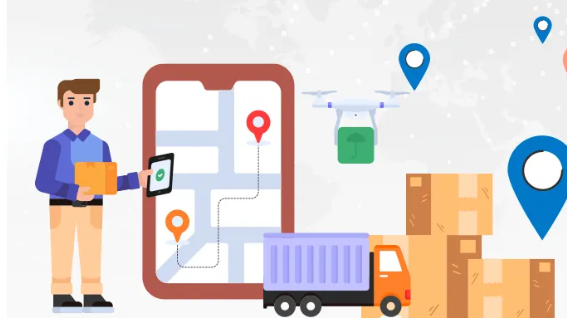
The cost argument for GPS-free logistics tracking is straightforward. A GPS hardware unit can cost anywhere from a few thousand to tens of thousands of rupees per vehicle, depending on features and provider. Multiply that across a fleet of 100 trucks, add installation costs, maintenance contracts, and the occasional replacement, and the capital requirement becomes significant.
SIM-based vehicle tracking eliminates all of that. By eliminating hardware costs entirely, RoaDo’s Freight Operating System (FOS) provides a Zero-CAPEX entry point for manufacturers to digitize their supply chain in under 5 minutes. There is no hardware to procure, no installation to schedule, and no maintenance to manage. The tracking capability comes from technology the driver already has: their phone and SIM card.
For businesses that rely on third-party carriers, this is especially important. You cannot mandate that every transporter in your network install a specific GPS device. But you can ask them to share a tracking link or accept a simple message that enables location sharing. The adoption barrier drops dramatically, and suddenly visibility becomes possible across your entire carrier network, not just your owned fleet.
This is one of the reasons GPS-free logistics tracking has seen rapid adoption in markets like India, where the logistics ecosystem is highly fragmented, and the majority of transport is handled by small operators.
What Real-Time Shipment Tracking Looks Like in Practice
From the logistics manager's perspective, real time shipment tracking through a SIM-based platform looks and feels similar to GPS-based tracking. You open a dashboard, see all active shipments on a map, and can click on any individual shipment to see its current location, speed, route progress, and estimated arrival time.
The difference is what happens behind the scenes. Instead of receiving data from a hardware unit, the platform is receiving it from the driver's phone through the mobile network. The end result on the screen is largely the same, but the infrastructure required to produce it is far simpler.
Alerts work the same way. If a vehicle stops for an extended period at an unplanned location, the system flags it. If the driver deviates from the assigned route, an alert goes out. If the shipment is running behind schedule, the consignee can be notified automatically. None of this requires additional hardware. It all runs through the existing mobile network and the platform's software layer.
For consignees waiting on deliveries, the experience also improves significantly. Instead of calling the shipper to ask where their goods are, they can receive automated updates with an accurate ETA based on live location data.
The Limitations Worth Knowing
No technology is without its limitations, and SIM-based vehicle tracking is no exception.
Accuracy is the most commonly cited concern. Cell tower triangulation is not as precise as dedicated GPS hardware. In areas with dense mobile coverage, the difference is minimal. In remote areas with fewer towers, the location estimate may have a wider margin of error.
Signal dependency is another factor. If the driver's phone loses mobile connectivity, location updates stop until the signal is restored. Advanced RoaDo’s Freight Operating System (FOS) go further by using AI-enabled exception management to flag these gaps and provide predictive ETAs until connectivity is restored.
For most logistics use cases, particularly route-level monitoring and exception management, these limitations do not significantly reduce the value of the technology. The question is not whether SIM-based tracking is as accurate as GPS hardware in every scenario. The question is whether it provides enough visibility to meaningfully improve operations compared to having no tracking at all.
For the vast majority of logistics teams, the answer is yes.
Conclusion
SIM-based vehicle tracking has changed what is possible for logistics teams that operate in complex, fragmented markets. It has made real time shipment tracking accessible to carriers of all sizes, removed the need for expensive hardware, and extended visibility to shipments that previously had none.
Fleet tracking without a GPS device is not a compromise. For most road freight operations, it is a genuinely practical solution that delivers the information logistics teams need, without the cost and complexity of traditional hardware-based systems.
RoaDo’s Freight Operating System (FOS) builds on this model by combining SIM-based tracking with compliance automation, including e-way bill monitoring through GSTN and vehicle verification via VAHAN. This ensures manufacturers not only gain visibility but also avoid compliance risks and penalties.
As mobile networks continue to improve and coverage expands, the case for GPS-free logistics tracking will only grow stronger. For businesses still relying on phone calls and manual check-ins to know where their shipments are, this technology is one of the most straightforward upgrades available today.
Frequently Asked Questions (FAQs)
1. What is SIM-based vehicle tracking?
It tracks vehicles using mobile network signals from a SIM card instead of GPS hardware.
2. Does SIM-based tracking require a smartphone?
No, even basic feature phones with a SIM card can enable tracking.
3. How accurate is SIM-based tracking?
Accuracy is sufficient for route monitoring, though slightly lower than GPS in low-network areas.
4. Can tracking work without internet connectivity?
It depends on mobile network signals, not the internet, but no signal means no updates.
5. Is SIM-based tracking cheaper than GPS tracking?
Yes, it eliminates hardware, installation, and maintenance costs entirely.
6. Can third-party transporters be tracked using this method?
Yes, it works easily across external carriers without requiring device installation.
7. What happens if the phone is switched off?
Tracking stops and resumes once the phone is turned back on and connected.
8. Is SIM-based tracking suitable for all logistics operations?
It works well for most road freight operations, especially where hardware adoption is low.
“Start tracking shipments in real time without GPS hardware using RoaDo. Simplify logistics visibility with zero setup cost.”