
What Is Freight Forwarding in Logistics? A Beginner's Guide for Manufacturers
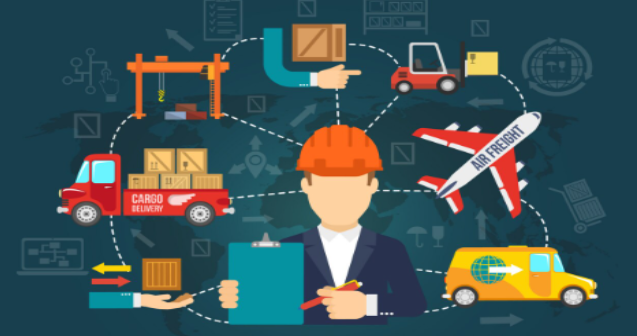
Freight forwarding in logistics refers to the process of managing the movement of goods across domestic and international supply chains, including both exports (outbound shipments) and imports (inbound shipments). For manufacturers, this means handling everything from sourcing raw materials globally to delivering finished goods to customers.
Key Highlights:
- Freight forwarding covers both inbound (import) and outbound (export) logistics, ensuring smooth movement of goods across the entire supply chain.
- A freight forwarder acts as a middleman between shippers and carriers, handling documentation, customs, and route planning so manufacturers do not have to.
- Freight forwarders and freight brokers are different: forwarders take on more responsibility for the shipment, while brokers mainly connect shippers with carriers.
- For manufacturers in India, freight forwarding plays a key role in efficiently managing both domestic and international supply chains.
- Understanding how freight forwarding works helps manufacturers make better decisions about who they partner with and how they move their goods.
Why Manufacturers Need to Understand Freight Forwarding
If you are a manufacturer, your job is to make things. But once your products leave the factory floor, a whole new challenge begins: getting them to the right place, at the right time, in the right condition.
That is where freight forwarding comes in.
Many manufacturers hand over this responsibility to someone else without fully understanding what it involves. That often leads to delays, unexpected costs, and a lack of visibility over their own supply chains. Understanding the basics of freight forwarding helps you ask the right questions, choose better partners, and stay in control of your logistics.
This guide breaks it all down in plain language.
What Is Freight Forwarding in Logistics?
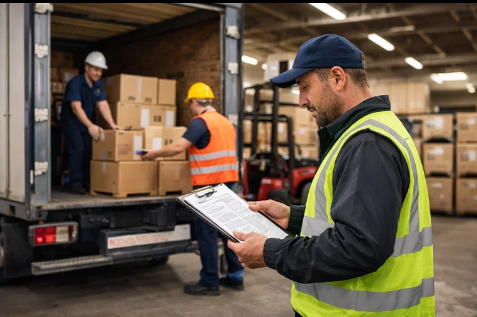
Freight forwarding in logistics refers to the process of organizing and managing the shipment of goods on behalf of a shipper. A freight forwarder does not usually own trucks, ships, or planes. Instead, they use their network of carriers and service providers to move goods from one point to another, often across multiple modes of transport.
Think of a freight forwarder as the project manager of your shipment. They coordinate everything: picking up goods from your facility, arranging transportation (by road, rail, air, or sea), managing paperwork, handling customs clearance, and ensuring delivery at the destination.
For manufacturers dealing with raw material sourcing (imports), finished goods distribution, or export shipments, a freight forwarder takes on a significant chunk of the logistical complexity that would otherwise fall on your internal team.
What Does a Freight Forwarder Actually Do?
A freight forwarder handles a wide range of tasks. Here is a breakdown of their key responsibilities:
Route and carrier selection: They assess the best route for your shipment based on cost, time, and cargo type. They also select the right carrier or combination of carriers for the job.
Documentation and compliance: This includes preparing bills of lading, commercial invoices, packing lists, certificates of origin, and in India-specific contexts, e-way bills and GST-related paperwork. Missing or incorrect documentation is one of the most common causes of shipment delays.
Customs clearance: For international shipments, freight forwarders handle the customs process at both the origin and destination. This includes filing declarations, paying duties, and ensuring the cargo complies with trade regulations.
Cargo insurance: Many freight forwarders offer or arrange insurance for shipments, protecting manufacturers against loss or damage in transit.
Tracking and communication: A good freight forwarder keeps you updated on where your shipment is and flags any issues early.
Warehousing and consolidation: In some cases, freight forwarders offer temporary storage or consolidate smaller shipments into a full load to reduce costs.
For manufacturers running multiple shipments across different customers, plants, or markets, working with a reliable freight forwarder can save a lot of time and reduce operational risk.Role of a Freight Forwarder in Export Shipments
For export shipments, a freight forwarder helps manufacturers move finished goods from their facility to international customers efficiently and compliantly.
Key responsibilities include:
- Preparing export documentation (invoice, packing list, shipping bill)
- Coordinating with carriers and booking cargo space
- Managing customs clearance at the origin
- Handling port operations and loading
- Ensuring compliance with international trade regulations
Role of a Freight Forwarder in Import Shipments
While freight forwarders are often associated with exports, they play an equally critical role in import logistics for manufacturers.
For import shipments, a freight forwarder helps ensure that goods sourced from international suppliers reach your facility smoothly and compliantly.
Key responsibilities include:
- Supplier coordination: Communicating with overseas suppliers to align shipment readiness, documentation, and pickup timelines.
- Import documentation: Managing documents such as the bill of entry, commercial invoice, packing list, and import licenses, where required.
- Customs clearance in India: Handling import declarations, duty calculations, and coordination with customs authorities to avoid delays at ports.
- Duty and tax management: Ensuring correct classification (HS codes) and helping avoid overpayment or penalties.
- Port handling and last-mile delivery: Coordinating container unloading, inland transport, and delivery to the factory or warehouse.
- Compliance with Indian regulations: Ensuring adherence to DGFT, GST, and other regulatory requirements.
For manufacturers dependent on global sourcing, an experienced freight forwarder reduces delays, avoids compliance issues, and ensures better cost control on inbound logistics.
Freight Forwarder vs. Freight Broker: What Is the Difference?
This is one of the most common points of confusion for manufacturers. The two terms are often used interchangeably, but they are not the same.
A freight broker is essentially a middleman who connects shippers with carriers. They help you find a truck or a shipping line, but do not take ownership of or responsibility for the actual movement of goods. Once they make the connection, the shipper and carrier handle the rest.
A freight forwarder, on the other hand, takes on a much more active role. They manage the end-to-end process of moving your goods, often taking on legal responsibility for the shipment. They work with multiple carriers, handle documentation, manage customs, and act as a single point of contact for the entire journey.
For manufacturers shipping goods domestically across India or exporting internationally, the distinction matters. If your shipment requires customs clearance, multi-modal transport, or complex documentation, a freight forwarder is the right partner. If you simply need help finding a carrier for a straightforward domestic run, a broker may be sufficient.
Types of Freight Forwarding Services in India
Freight forwarding is not a single service. It covers a range of shipment types and modes. Here are the main categories relevant to manufacturers in India:
Full Truck Load (FTL): The entire truck is booked for one shipment. Suitable for large volumes going to a single destination.
Part Truck Load (PTL): Your cargo shares space with other shipments. Cost-effective for smaller volumes.
Full Container Load (FCL) and Less than Container Load (LCL): Used in international shipments. FCL means your goods fill an entire container. LCL consolidates multiple smaller shipments into one container.
Air freight: Used when speed is the priority, typically for high-value or time-sensitive goods.
Rail freight: Growing in relevance for bulk goods across long distances within India.
EXIM (Export-Import) freight forwarding: Primarily focuses on managing international shipments, including export documentation, customs clearance, port handling, and global delivery coordination.
Manufacturers dealing with complex supply chains often need a combination of these services depending on the route, product type, and delivery urgency.
Common Challenges Manufacturers Face with Freight Forwarding
Even with a freight forwarder in place, manufacturers run into problems that slow down operations and increase costs. Some of the most common include the following:
Lack of real-time visibility: Many manufacturers have no idea where their shipment is until there is a problem. This makes it hard to plan production schedules or keep customers informed.
Documentation errors: A single mistake in a waybill or customs declaration can hold up an entire shipment, sometimes for days.
Over-reliance on manual processes: Many supply chains still run on phone calls, spreadsheets, and paper records. This creates delays and leaves room for costly errors.
Fragmented communication: When the freight forwarder, the carrier, the warehouse, and the manufacturer are all working in silos, things fall through the cracks.
Limited financial control: Freight invoices are often difficult to verify manually, leading to overbilling or reconciliation issues that affect cash flow.
Import-specific challenges include:
- Import clearance delays: Missing or incorrect documentation can delay cargo at Indian ports, leading to demurrage and detention charges.
- Lack of visibility on inbound shipments: Manufacturers often struggle to track supplier shipments until they arrive at port.
Lack of visibility on inbound shipments: Manufacturers often struggle to track supplier shipments until they arrive at port.
These challenges become even more significant as a manufacturer's distribution network grows. Scaling up operations without the right systems in place can quickly become unmanageable.How Technology Is Changing Freight Forwarding
The freight forwarding industry is going through a significant shift. Manufacturers are no longer willing to accept zero visibility and slow communication as the norm. Technology is stepping in to fill these gaps.
Modern logistics platforms now offer real-time shipment tracking without the need for GPS hardware, automated e-way bill generation, digital proof of delivery, and integrated invoice reconciliation. These tools give manufacturers the kind of end-to-end visibility that was previously only available to large enterprises with expensive infrastructure.
Artificial intelligence is also playing a growing role. AI-powered systems can now predict delays, optimize routes, flag exceptions, and automate repetitive tasks like invoice audits. For a manufacturer managing hundreds of shipments at a time, this kind of automation reduces workload and improves accuracy.
The move toward digitization in India's logistics sector is accelerating. With the government pushing for compliance automation through platforms like GSTN and VAHAN, manufacturers who continue to rely on manual processes will find it increasingly difficult to keep up.
What Manufacturers Should Look for in a Freight Forwarding Partner
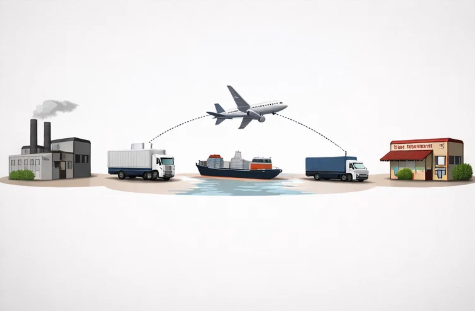
Choosing the right freight forwarding partner is not just about price. Here are a few things worth evaluating:
Industry experience: Does the forwarder have specific experience in your sector, whether that is automotive, pharma, consumer goods, or industrial manufacturing?
Technology capabilities: Can they provide real-time tracking, digital documentation, and timely updates? If they are still working entirely on phone calls and paper, that is a red flag.
Compliance knowledge: For manufacturers operating in India, familiarity with e-way bills, GST workflows, and VAHAN integration is important.
Network reach: Do they have the carrier relationships and geographic coverage to support your current and future distribution needs?
Financial transparency: Can you easily verify invoices and reconcile payments? Good freight forwarders provide clear billing with supporting documentation.Import expertise: Does the forwarder have experience handling inbound shipments, including customs clearance, duty structures, and supplier coordination?
Conclusion
Freight forwarding is a core part of any manufacturer's logistics operation. Whether you are importing raw materials or exporting finished goods, freight forwarding plays a critical role in ensuring smooth, compliant, and cost-effective movement of goods across your supply chain.
But a freight forwarder is only one piece of the puzzle. To truly stay in control of your supply chain, you need visibility, data, and the ability to manage everything from order to delivery in one place. This is where platforms like RoaDo come in, helping manufacturers and logistics teams bring together tracking, compliance, finance, and analytics under a single system.
The more you understand about how freight forwarding works, the better equipped you are to build a supply chain that is not just functional but genuinely efficient.
Frequently Asked Questions
1. What is the role of a freight forwarder in logistics?
A freight forwarder manages end-to-end shipment movement, including transport planning, documentation, customs clearance, and coordination with multiple carriers on behalf of the shipper.
2. How is a freight forwarder different from a freight broker?
A freight forwarder handles the entire shipment process, while a broker mainly connects shippers with carriers without managing documentation, compliance, or execution.
3. What types of freight forwarding services are available in India?
Common services include FTL, PTL, FCL, LCL, air freight, rail freight, and EXIM logistics, depending on shipment size, urgency, and destination.
4. Why do manufacturers need freight forwarding services?
Freight forwarders reduce logistical complexity, handle compliance, and ensure timely delivery, allowing manufacturers to focus on production and core operations.
5. What challenges can occur in freight forwarding?
Common issues include a lack of visibility, documentation errors, manual processes, communication gaps, and difficulty in verifying freight costs, especially at scale.
6. What is the role of a freight forwarder in import shipments?
A freight forwarder manages supplier coordination, import documentation, customs clearance, duty payments, and inland delivery to ensure smooth and compliant inbound logistics.
“Take control of your freight operations with real-time visibility, automated workflows, and smarter coordination across every shipment. With RoaDo, simplify logistics, reduce delays, and scale efficiently with a system built for modern manufacturing supply chains.”